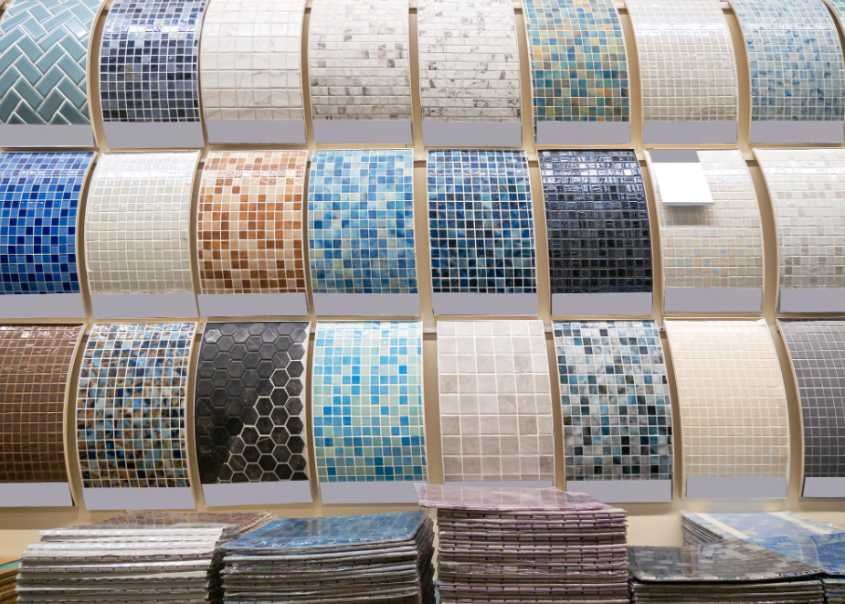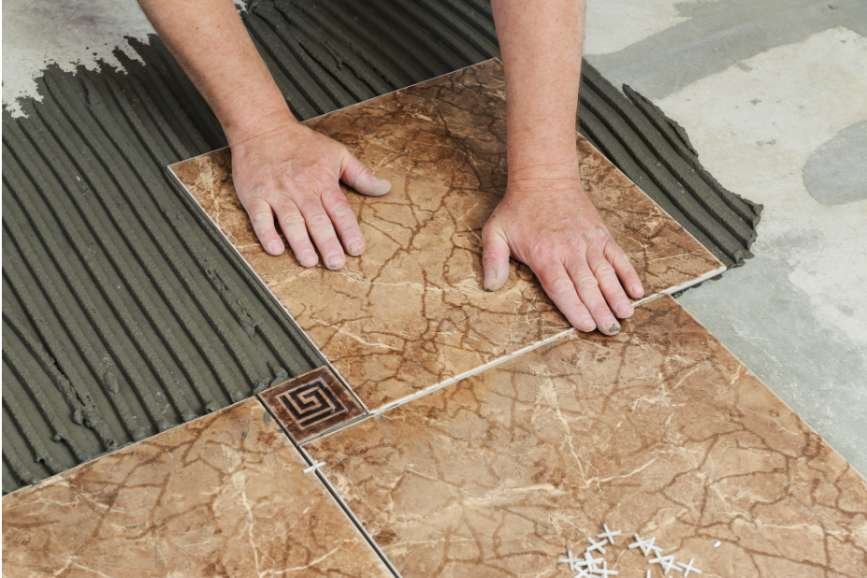
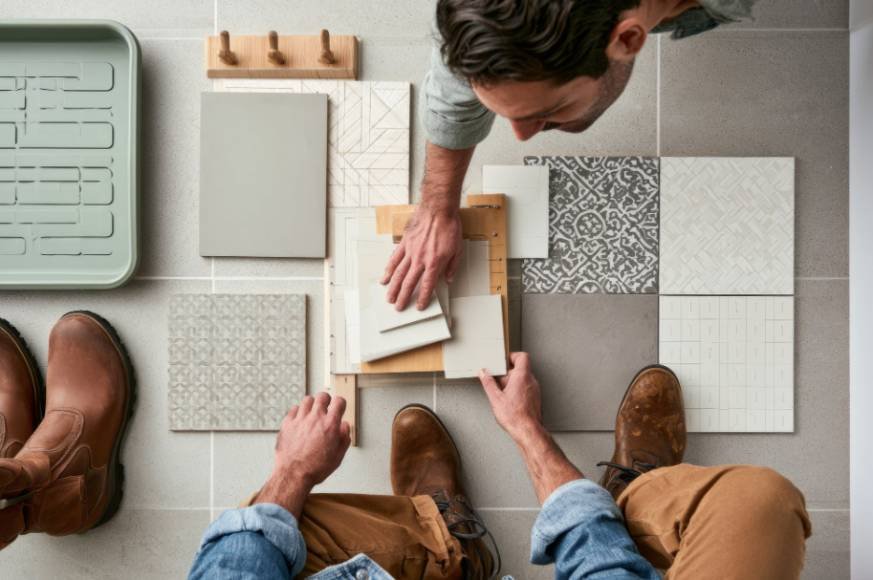
I find that tiles often look beautiful together on a sample board but feel surprisingly overwhelming once they cover a room. The problem usually comes from several strong features competing: contrasting grout, intricate shapes, dramatic veining, and too many changes in direction.
When I consider how to mix tile shapes without making a room look busy, I start by deciding which surface deserves attention. Then I choose supporting tiles that give the eye somewhere to rest. This approach creates personality while keeping the finished space comfortable and cohesive.
Understand What Makes Mixed Tiles Look Busy
Shape, layout, and surface pattern contribute different kinds of visual activity. A rectangle describes a tile’s shape. Herringbone describes its arrangement. Marble veining describes a pattern across its surface.
Combining these features can work, but changing all three across adjoining surfaces creates more visual information to process.
Grout adds another layer. Small white hexagons with charcoal grout create a pronounced geometric network. Those same tiles with closely matched grout look softer. Before rejecting a shape combination, consider whether grout contrast is causing the visual clutter.
Choose One Dominant Tile First
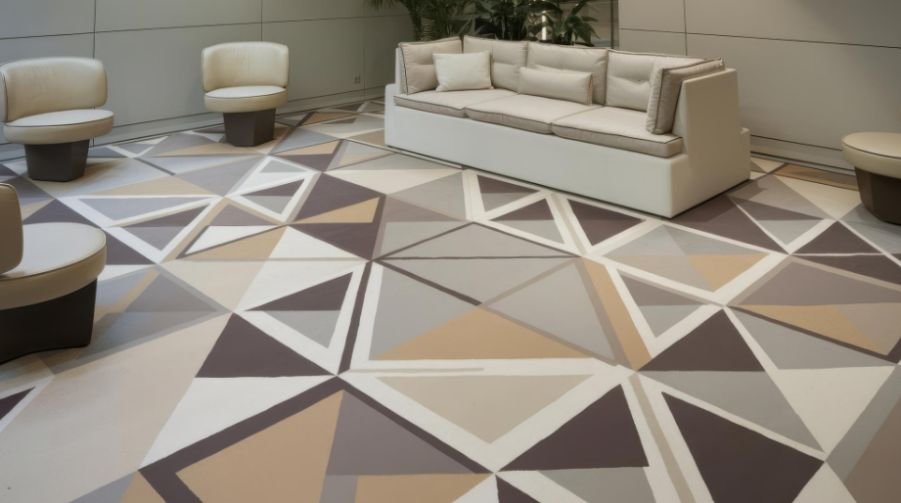
Begin with the surface that occupies the most visible space or establishes the room’s character. This might be a bathroom floor, a kitchen backsplash, or a tiled fireplace surround.
Choose its supporting tile afterward. If a sculptural backsplash provides the main feature, a quiet rectangular floor can support it without demanding equal attention.
Dominance does not depend entirely on coverage. A small, brightly colored mosaic can attract more attention than an entire neutral floor. Consider color contrast, shine, and pattern alongside the amount of tile.
Two tile shapes offer a manageable starting point. A third can work when it serves a clear purpose and remains visually restrained.
Connect Different Shapes Through Color
A shared color family helps distinct geometries feel related. Warm ivory rectangles can complement cream hexagons even when their dimensions and finishes differ.
Compare undertones carefully. A cool white wall tile may make a warmer floor look unexpectedly yellow. Place samples beside cabinets, countertops, paint, and trim before making your selection.
Exact color matching is unnecessary. Repeating a subtle shade from one tile in another surface can provide enough connection. If both shapes are expressive, keep their colors relatively quiet. If the palette includes strong contrasts, simplify the surrounding layouts.
Color coordination can help create a cohesive bedroom, just as it helps different tile shapes work together in a tiled room. If you are choosing finishes for a bedroom renovation, consider how wall colors, flooring, and decorative accents complement one another to create the atmosphere you want. Explore these ideas for the best colour for a sleeping room when planning a coordinated color palette for your home.
Balance Scale and Grout Contrast
A useful principle for how to mix tile shapes without making a room look busy is to vary scale while controlling contrast.
Tile size also affects how different shapes work together, from the visual continuity of larger pieces to the detail created by smaller formats. Before combining tiles, consider the room’s dimensions, grout joints, installation requirements, and the amount of pattern each surface introduces. This comparison of large format tiles vs small tiles can help you weigh the practical and visual differences when planning a balanced tile scheme.
Large rectangular wall tiles can provide a calm background for smaller geometric floor tiles. However, size alone does not guarantee balance. Large tiles with dramatic veining may appear more active than small, solid-colored squares.
Use Grout to Control Emphasis
Closely matched grout reduces the prominence of individual tile outlines. Contrasting grout emphasizes geometry and makes the layout more noticeable.
You can use different grout colors on separate surfaces when each choice supports the overall scheme. Record the selections clearly so the installer knows which product belongs where.
Joint widths must suit the exact tiles and installation requirements. Avoid forcing identical spacing simply to achieve a particular appearance.
Try These Shape Combinations
Hexagon Floors With Rectangular Walls
Hexagons introduce geometry while rectangular walls provide an orderly backdrop. Related colors and restrained wall grout help the combination feel connected.
For a quieter result, avoid adding a strongly patterned niche that introduces another competing feature.
Square Floors With Elongated Backsplash Tiles
Square flooring can anchor a kitchen with narrow rectangular backsplash tiles. A simple stacked backsplash arrangement keeps the composition controlled.
Consider the countertop too. Prominent stone veining already contributes pattern, so the backsplash may need less contrast.
Curved Accents With Simple Field Tiles
Scallop or fan-shaped tiles can create a distinctive vanity wall or fireplace feature. Surround them with plain rectangular or square tiles.
Keep the curved treatment within a clear boundary. Deliberate edges help it read as a feature rather than an unrelated patch.
Mix Finishes With Restraint
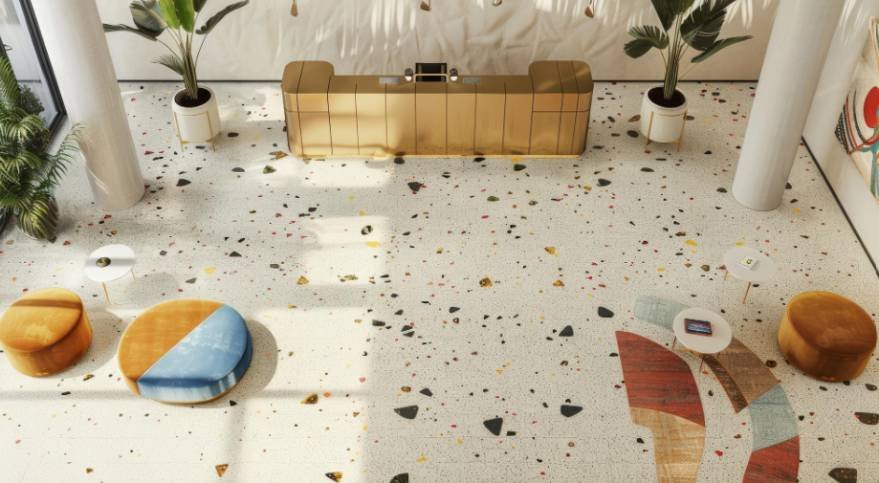
Matte and glossy tiles can add depth without introducing another color. Glossy wall tiles paired with a quieter matte floor often provide enough variation.
However, reflections also contribute visual movement. Irregular glazing, textured surfaces, and strong lighting can make a simple shape feel more active.
Check that each tile suits its intended location. A finish that looks attractive on a wall may not be appropriate for a wet floor. Confirm the manufacturer’s application guidance before purchasing.
Plan the Whole Room and Its Transitions
Evaluate everything visible from the doorway. Wallpaper, cabinet fronts, shower glass, countertops, and neighboring flooring all influence whether mixed tiles feel balanced.
Plan where each shape begins and ends. Corners, shower entrances, cabinet edges, and fireplace surrounds can provide logical boundaries.
Ask your installer to review tile thicknesses, finished heights, trim, and edge cuts. Different formats do not always share compatible dimensions, so continuous grout alignment may be impractical. A planned transition usually looks more intentional than forcing unrelated grids together.
Test Samples Before Ordering
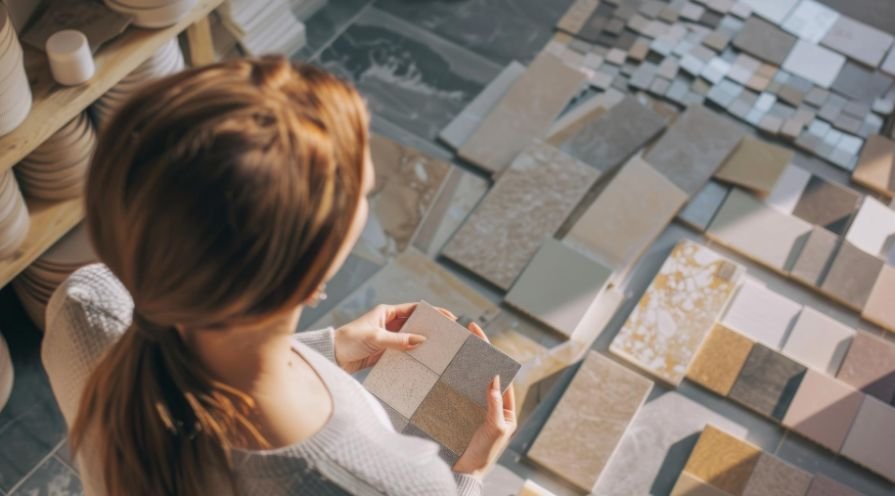
Compare several pieces of each tile, especially products with shade variation or printed patterns. One sample cannot show the full effect. Place floor samples horizontally and wall samples vertically. Include grout samples and nearby finishes, then examine everything in daylight and evening lighting.
Once you have settled on a combination of tile shapes, calculate the quantity needed for each format separately. Account for the room dimensions, pattern layout, edge cuts, and additional material needed for breakage or future repairs. Accurate estimates help you order enough of each tile without unnecessary surplus. Use these steps to calculate tile quantities for your next project before placing your final order.
Step back to the doorway and photograph the arrangement. If every surface attracts equal attention, simplify one element before ordering.
Frequently Asked Questions
1. What is the simplest approach to how to mix tile shapes without making a room look busy?
Choose one dominant tile, add a quieter supporting shape, and connect them through color. Test grout contrast before committing.
2. Can three tile shapes work in a small bathroom?
Yes, provided they have distinct roles. Keep at least one surface quiet and assess everything visible together.
3. Should mixed tiles have matching grout?
Not necessarily. Coordinated grout can soften different shapes, while carefully placed contrast can emphasize a feature.
Bring the Room Together
I would choose a clear focal point before adding another shape. When color, grout, scale, and boundaries support that decision, mixed tiles feel considered. Testing the complete combination gives me more confidence than selecting each finish separately.