
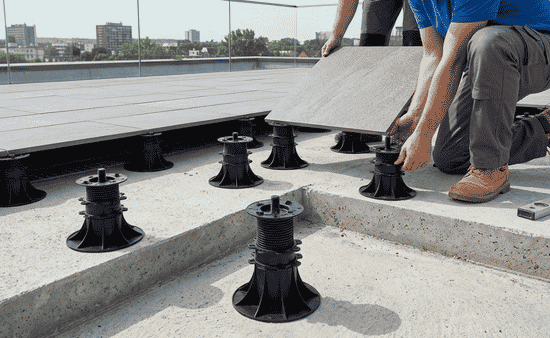
Creating durable and visually appealing outdoor spaces requires careful selection of materials and construction methods. In recent years, adjustable paving support systems have emerged as a practical solution for outdoor landscaping projects. These systems offer significant benefits in terms of flexibility, durability, and maintenance, making them an ideal choice for both residential and commercial applications.
What Are Adjustable Paving Support Systems?
Adjustable paving support systems are structures designed to elevate and stabilise paving materials above the ground or substrate. Unlike traditional fixed supports, adjustable supports allow for fine-tuning of height and alignment, ensuring a perfectly level and stable surface. This adaptability is particularly useful in situations where uneven ground or variation in height exists.
The Components of Adjustable Paving Supports
Typically, an adjustable paving support system consists of a base, adjustable column, and a platform or head to hold the paving slab or deck. The column is threaded, allowing precise height adjustments. The base is broad and sturdy to distribute the load effectively, while the platform provides lateral support for the paving element.
Advantages of Using Adjustable Paving Support Systems
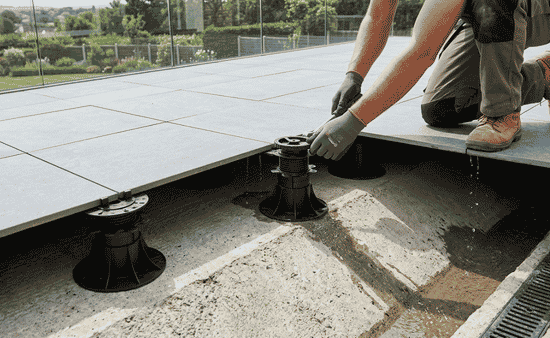
The primary advantage of adjustable systems is their versatility. They can be used on surfaces with varying slopes and substrates, including concrete pads, gravel, or soil. This flexibility facilitates the construction of level and stable patios, terraces, and walkways with minimal groundwork.
Another important benefit is enhanced drainage. Since the paving is elevated, water can flow freely beneath the surface, preventing pooling and reducing the risk of water damage to underlying materials. This feature is essential for longevity and maintenance of outdoor areas.
Speed and Ease of Installation
Adjustable systems are easier and quicker to install compared to traditional methods. Adjustments can be made on-site without the need for additional levelling materials, reducing labour time and costs. Additionally, these supports do not require adhesives or bonding agents, allowing for future disassembly if necessary.
Applications of Adjustable Paving Supports
Common applications include decking, paving terraces, rooftop gardens, and raised walkways. The ability to customise height and slope effectively addresses site-specific challenges.
In commercial settings, adjustable paving supports are valued for their capacity to accommodate mechanical and electrical installations beneath the pavement. This makes them a preferred option for urban plazas and public outdoor spaces where accessibility to utilities is required.
Materials and Durability
Adjustable paving supports are usually manufactured from durable materials such as polypropylene or reinforced plastics, ensuring resistance to weather, UV radiation, and chemical exposure. This ensures a long service life even in harsh outdoor environments.
Environmental and Maintenance Considerations
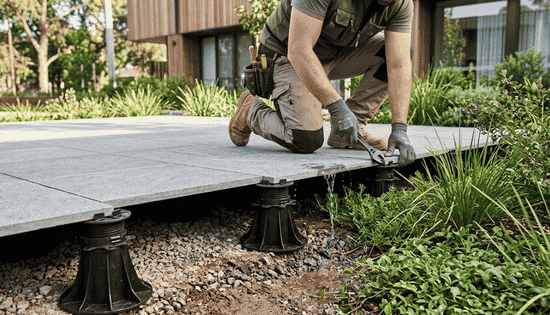
Elevating paving surfaces reduces the impact on soil and provides better airflow, which can help minimise local temperature fluctuations and promote healthier surrounding vegetation. The systems also enable easier access for maintenance, allowing damaged or worn tiles to be replaced without significant disruption.
Since the system permits water drainage and avoids water pooling, it also contributes positively to sustainability by mitigating risks of erosion and underground water damage.
Choosing the Right Adjustable Paving Support
Selecting an appropriate adjustable paving support depends on several factors, including the type and weight of paving material, the ground conditions, and the required height adjustment range. Careful evaluation of these parameters is crucial to ensure safety and stability of the finished surface.
It is advisable to source adjustable supports from reputable suppliers offering tested and certified products. For those in Australia, solutions such as the adjustable paving support from Elmich provide dependable quality and technical support.
Installation Best Practices
Proper installation is fundamental to achieving the best performance from adjustable paving support systems. Installation begins with site preparation to remove loose debris and level the base area as much as possible. Next, adjustable supports are positioned and raised to the desired height.
The paving slabs or decking can then be placed on top, with final adjustments made to ensure uniformity. Periodic checks during and after installation help maintain stability and alignment.
Cost and Long-Term Value
While initial costs of adjustable paving supports may be higher than traditional fixed supports, their benefits in flexibility, drainage, and maintenance often result in lower overall lifecycle costs. The ease of access to underlying services without dismantling large sections is another considerable advantage.
Conclusion
Adjustable paving support systems represent an innovative approach to constructing outdoor spaces that are both functional and aesthetically pleasing. Their adaptability, ease of installation, and maintenance benefits make them increasingly popular in landscaping and construction projects.
For designers, architects, and builders aiming to enhance outdoor environments while ensuring durability and sustainability, incorporating adjustable paving supports is a strategic choice. Trusted products like those from Elmich provide reliable solutions that meet the demands of modern outdoor construction.