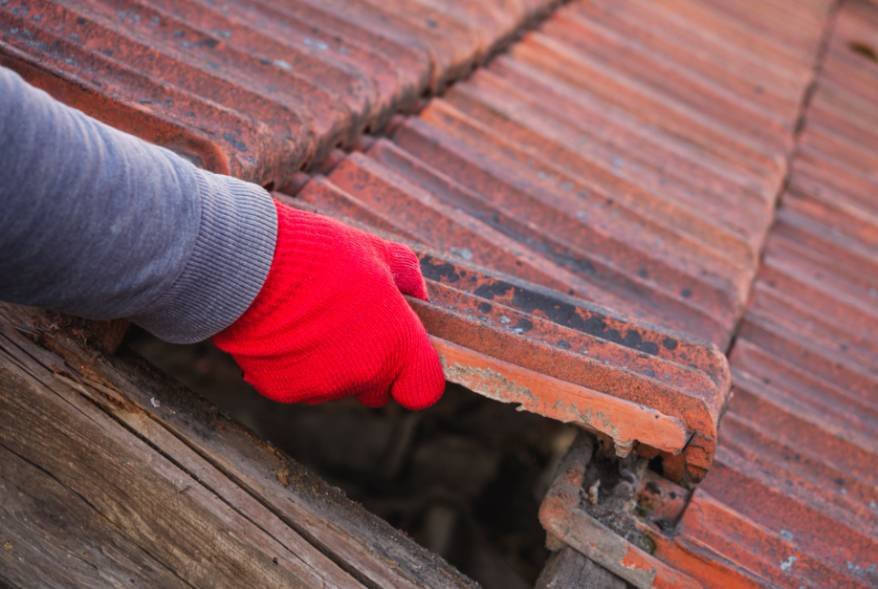
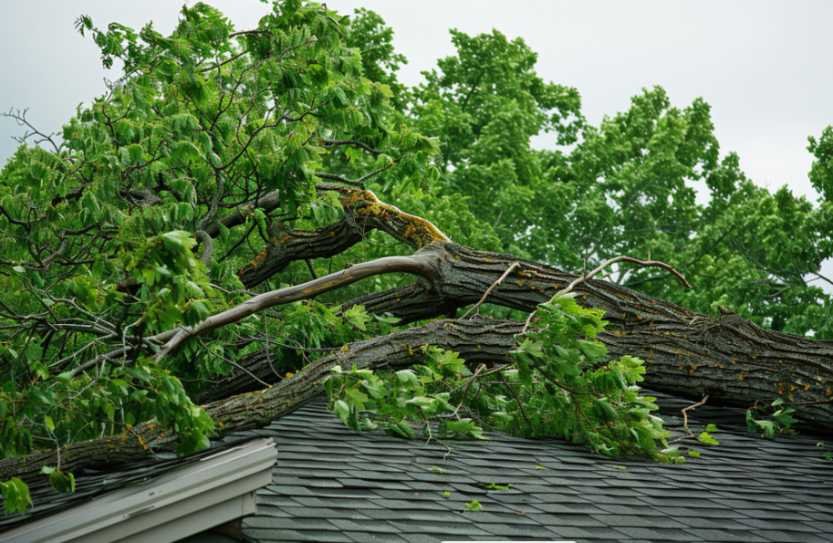
A heavy tree limb hitting your house can turn a thunderstorm or high-wind event into an expensive roofing emergency within seconds. The damage may be obvious, such as a hole in the roof, or almost invisible from the ground. Cracked shingles, damaged flashing, broken roof decking, and attic leaks can all develop after an impact.
If this happened at my home, I would focus first on keeping everyone safe and then on preventing additional water damage. Knowing what to do when a tree branch damages your roof gives you a clear order of action when every minute matters.
What Should You Do Immediately After a Tree Branch Hits Your Roof?
Start by keeping everyone away from the impacted portion of the house. If a large limb has penetrated the roof or ceiling, or you notice sagging ceilings, new wall cracks, shifting framing, or other signs of structural damage, leave the affected area.
If the impact has involved electrical lines, do not approach the tree, branch, yard, or exterior of the home near those wires. Contact emergency services or your local electric utility.
I would also stay completely off the roof. Damaged roof decking may no longer support weight, while wet shingles and unstable tree limbs create additional fall hazards.
Should You Remove the Tree Branch Yourself?
Unless the debris is small and safely reachable from the ground, leave removal to a professional.
A large limb can remain under considerable tension after it falls. Cutting one section can suddenly shift hundreds of pounds of weight, potentially damaging gutters, shingles, siding, windows, or the person attempting the removal.
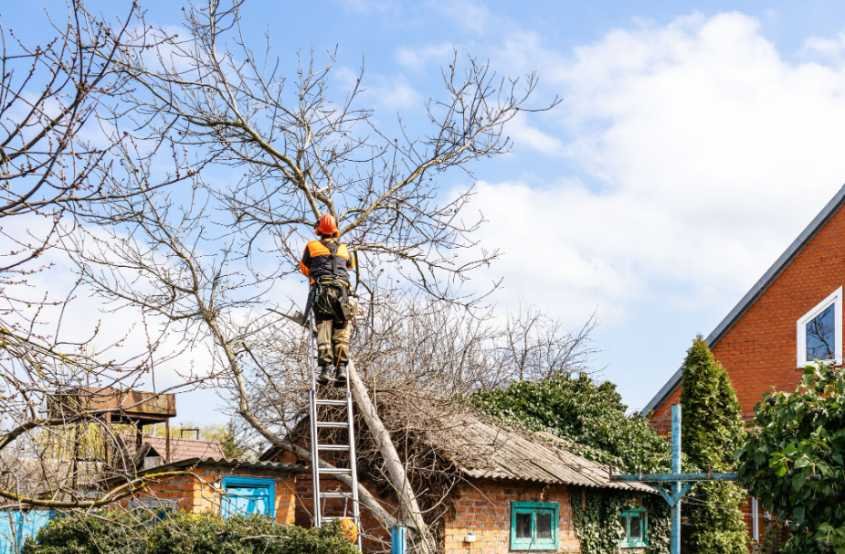
Professional tree removal crews have rigging systems, lifts, and, when necessary, cranes that allow them to remove large limbs without placing additional stress on the home.
How Can You Inspect Roof Damage Safely From the Ground?
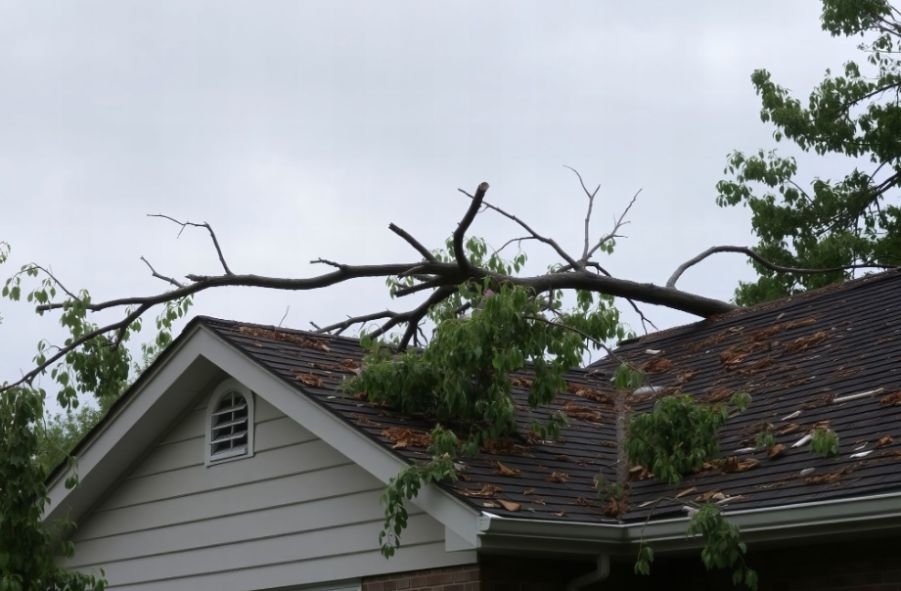
Once immediate hazards are under control, inspect the home from several safe locations around the property.
Look for missing or fractured shingles, bent gutters, damaged fascia, displaced flashing, exposed underlayment, punctures, fallen roofing material, and unusual dips in the roofline.
A small-looking impact can hide significant damage. Tree limbs may crack roof sheathing or loosen roofing components beneath the shingles without creating an obvious exterior hole.
That is why I would arrange a professional roof inspection even when the damage initially appears cosmetic.
Before the contractor arrives, learn how to prepare for a professional roof inspection so you can document visible damage, organize relevant information, and help the inspection proceed efficiently.
What Should You Check Inside Your Home?
The next place I would inspect is the attic and the rooms below the impact.
Look for water drips, damp insulation, stained roof decking, cracked drywall, ceiling bulges, or daylight entering through damaged roofing materials. Remember that water can travel along rafters or sheathing before dripping, so the visible ceiling leak may be several feet from the actual roof damage.
If water has reached the attic, learn how to protect attic insulation after a roof leak to identify moisture damage, dry affected materials properly, and determine whether insulation needs replacement.
If water is dripping indoors, place buckets or plastic containers beneath the leak and move furniture, electronics, rugs, and valuables away from the area.
Water near outlets, light fixtures, wiring, or electrical panels creates a more serious hazard. Avoid touching wet electrical components. If you can safely isolate power from a dry location, do so; otherwise, contact an electrician or emergency service.
How Should You Document Roof Damage for Insurance?
Before tree removal or permanent repairs begin, document everything you can safely see.
Take clear photographs and videos of the branch, roof impact area, damaged shingles, gutters, siding, landscaping, interior water stains, attic moisture, ceiling damage, and affected belongings.
I would also keep every estimate and receipt related to emergency tarping, tree removal, inspections, cleanup, and roof repair.
This evidence can help establish what the property looked like immediately after the incident and support a homeowners insurance claim.
When Should You Contact Your Homeowners Insurance Company?
Contact your insurer promptly after significant damage and ask what they need before permanent repairs begin.
Many US homeowners insurance policies may cover sudden and accidental damage caused by storms or fallen tree limbs, but coverage is not identical from one policy to another. The cause of the incident, policy exclusions, deductible, tree condition, and individual circumstances can all affect the claim.
Your insurer may request photos, videos, contractor estimates, inspection reports, or records related to emergency mitigation.
If the branch originated from a neighbor’s tree, do not automatically assume that your neighbor is responsible. Liability may depend on whether the tree was known to be hazardous, why it failed, state law, and the insurance policies involved.
How Serious Is the Tree Branch Damage?
Understanding the severity can help you determine how urgently professional repairs are needed.
Minor damage may include surface scuffs, shingle granule loss, or small gutter dents. I would still have these areas inspected because hidden damage can exist underneath.
Moderate damage often includes cracked shingles, damaged flashing, exposed underlayment, small roof punctures, or localized interior leaks. These situations usually require prompt repairs and temporary protection from rain.
Severe damage includes punctured roof decking, sagging rafters, broken structural framing, major ceiling movement, large openings, or partial collapse. Evacuating the affected portion of the home may be necessary until professionals determine that it is structurally safe.
Who Should You Call to Repair Tree Damage?
Knowing what to do when a tree branch damages your roof also means knowing which professional handles each part of the problem.
A tree removal company or qualified arborist handles the fallen limb. A licensed roofing contractor evaluates the roof and performs temporary and permanent repairs. When the impact affects rafters, trusses, or other major structural components, a structural engineer may also need to evaluate the home.
Before authorizing the roofing work, review these questions to ask before approving a roof repair to clarify the repair scope, materials, costs, and any additional work that may be necessary.
The roofer should inspect more than the visible shingles. A thorough evaluation may include shingles, flashing, underlayment, roof decking, gutters, fascia, soffits, ventilation components, rafters, and trusses.
How Can You Prevent More Water Damage Before Repairs?
Emergency tarping can temporarily cover exposed roofing and prevent rain from entering until permanent repairs are completed.
I would not climb onto a damaged roof to install the tarp myself. A roofing contractor can usually secure temporary weather protection without exposing the homeowner to an unstable roof surface.
Continue controlling interior leaks with containers and move vulnerable belongings away from affected rooms. Fast mitigation can help protect drywall, flooring, attic insulation, framing, and personal property.
Will You Need Roof Repair or Full Replacement?

A fallen branch does not automatically mean that the entire roof needs replacement.
Localized shingle, flashing, or decking damage can often be repaired. Larger structural damage, multiple affected roof slopes, widespread water intrusion, or significant damage to an older roofing system may make replacement more practical.
The decision should come after the tree debris is removed and a qualified roofer can see the full extent of the damage.
How Can You Prevent Tree Branch Roof Damage in the Future?
After repairs, I would inspect the trees around the property for dead limbs, cracks, disease, leaning trunks, or branches hanging directly over the roof.
A qualified arborist can identify weak limbs before they fall. Regular tree maintenance becomes especially important in US regions that experience hurricanes, severe thunderstorms, tornadoes, heavy snow, ice storms, or frequent high winds.
It is also smart to inspect shingles, flashing, gutters, and nearby trees after major weather events.
Frequently Asked Questions
1. Can a small tree branch cause serious roof damage?
Yes. A smaller limb falling from height or moving at high speed can crack shingles, damage flashing, puncture roofing materials, or weaken roof decking.
2. Should I call a roofer or tree removal company first?
If a large branch remains on the roof, the tree removal company may need to stabilize or remove it before the roofer can complete a full inspection. The two contractors may coordinate on severe damage.
3. Should I call insurance before making roof repairs?
Report significant damage promptly and ask your insurer what documentation they require. Emergency measures needed to prevent additional damage should not normally be delayed when the home is exposed to weather.
4. Can roof decking be damaged even if the shingles look fine?
Yes. Impact force can crack, split, or weaken sheathing underneath apparently intact shingles, which is one reason professional inspection is important.
5. Is emergency roof tarping necessary after tree damage?
Tarping may be necessary when the impact exposes underlayment, decking, or the interior of the home to rain. A professional roofer should handle tarping when roof access is unsafe.
6. Does homeowners insurance cover tree branch roof damage?
Coverage depends on your policy, the cause of the damage, exclusions, deductibles, and specific circumstances. Your insurance company can determine how your policy applies to the loss.
7. When should I leave the house after a tree hits the roof?
Leave the affected area if you notice roof sagging, ceiling movement, structural cracks, major penetration, collapsed materials, downed power lines, or other signs that the home may be unsafe.
Final Thoughts
Knowing what to do when a tree branch damages your roof can help you make safer decisions during a stressful situation and prevent a manageable repair from becoming extensive water or structural damage.
I would prioritize people before property: stay off the damaged roof, avoid power lines, control indoor leaks safely, photograph everything, contact the insurer, and let qualified tree and roofing professionals handle hazardous work.
Even when the roof appears intact, hidden damage to underlayment, decking, flashing, rafters, or attic insulation can create problems weeks or months later. A prompt professional inspection gives you the best chance of catching those issues early.