I notice the best backyards feel connected before any individual feature catches my attention. The patio complements the house, pathways lead naturally toward seating, and planting softens the edges. That harmony usually comes from repeating a few thoughtful choices.
When exploring outdoor patio tile ideas for a cohesive backyard, I start with the features that will stay: siding, brickwork, doors, fences, and mature landscaping. Building around those elements makes a patio feel intentional. These seven approaches combine visual continuity with practical decisions about materials, layout, and outdoor conditions.
1. Build Your Palette Around the House
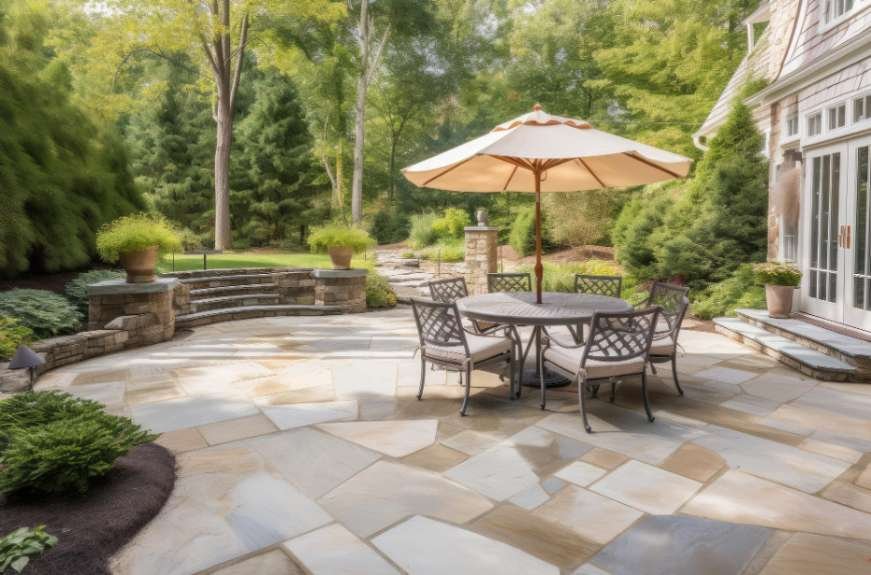
Your home’s exterior provides a starting point. Look closely at its undertones before choosing tile. Red brick may contain warm brown, cream, or charcoal accents, while white siding can lean warm or cool.
Choose a main tile color that relates to one of those existing shades. Then introduce a supporting color through borders, planters, or furniture. Keeping the palette restrained makes separate backyard features easier to coordinate.
Try a Combination That Connects Existing Features
Warm beige stone-look tile can complement brick walls and cedar fencing. Soft gray porcelain can connect white siding with charcoal window frames. Earth-toned flooring can suit stucco walls and terracotta planters.
Bring samples outside and compare them against the house in morning light, afternoon sun, and shade before ordering.
2. Create an Indoor-to-Outdoor Connection

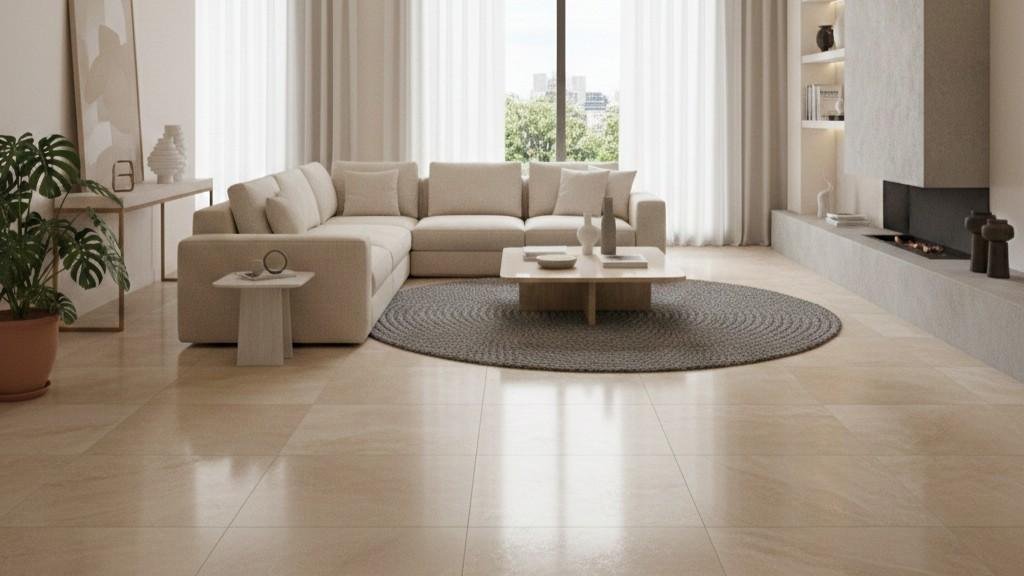
A patio visible through sliding or French doors becomes part of the view from inside. Coordinating its flooring with the adjoining room can make the transition feel calmer.
Match the general color, pattern scale, or visual texture rather than assuming the same product belongs in both locations. An indoor limestone-look floor might connect beautifully with exterior-rated porcelain in a similar warm shade.
Outdoor suitability remains essential. Confirm that the selected product is approved for your intended exposure and climate. A matching appearance does not mean matching performance.
Aligning grout lines across the doorway can strengthen continuity when dimensions and installation conditions allow. However, threshold height, drainage, and weather protection should guide the final details.
3. Repeat One Main Tile Across Backyard Zones
Dining, lounging, and cooking areas can serve different purposes while sharing a visual foundation. Continuing one main tile across these spaces helps the backyard feel organized.
Define each zone through furniture placement, shade structures, or a controlled layout change. For example, a straight grid can cover the main patio while a border outlines the dining area.
The most useful outdoor patio tile ideas for a cohesive backyard balance repetition with variation. Repeating the dominant color keeps the design connected; changing one detail gives each area character.
Keep walking routes clear when planning zones. Pull dining chairs out, account for grill access, and check that people can move between doors and seating without squeezing around furniture.
4. Connect the Patio With Garden Paths

Paths should look like they belong to the patio. Repeat its main color, use a coordinating product from the same collection, or echo its border material along the route.
A large-format patio might connect to smaller matching units on a garden path. Alternatively, stepping pavers in a related shade can lead through planting without extending solid flooring everywhere.
Distinguish porcelain pavers designed for supported or landscape installations from thinner tile intended for a bonded assembly. Installation methods depend on the specific product and supporting system.
Before ordering materials for a patio and its connecting garden paths, measure each area separately and account for the different tile sizes, layout patterns, and edge cuts. Include an appropriate allowance for breakage and cutting waste, especially if the design combines multiple formats or decorative borders. Use this advice on how to calculate tile quantities for your next project to estimate the materials needed before purchasing.
Soften boundaries with planting beds or gravel where appropriate. Avoid creating narrow pockets that trap leaves, collect water, or make maintenance difficult.
5. Use Patterns as Deliberate Accents
Herringbone, checkerboard, geometric designs, and Spanish-inspired patterns can add personality. Give a strong pattern a defined role rather than allowing several unrelated patterns to compete.
Combining different tile shapes can add character to a patio, but too many competing patterns may make the space feel visually cluttered. Choose one dominant design and pair it with simpler shapes, coordinated colors, or understated grout to maintain a balanced appearance. For more practical pairing ideas, read how to mix tile shapes without making a room look busy before finalizing your outdoor layout.
A patterned inset beneath a dining table can act like a permanent outdoor rug. A narrow border can frame plain field tile. Decorative stair risers or an outdoor kitchen backsplash can repeat an accent color without covering the entire patio.
Balance Pattern With Quiet Surroundings
If the floor has a bold design, choose simpler upholstery and planters. If furniture already features strong prints, a subtle stone-look or concrete-look surface provides breathing room.
For decorative mosaics, confirm that the complete product—including its backing—is suitable for the intended outdoor application. Wall suitability does not establish floor suitability.
6. Coordinate Tile Size, Grout, and Furniture

Tile size changes how a patio reads. Larger formats create fewer visible joints, while smaller units introduce more rhythm and detail. Neither automatically makes every backyard look bigger.
Consider the patio’s dimensions and edges. A format that produces balanced cuts can look more intentional than oversized pieces surrounded by thin slivers.
Choosing the right tile size can influence the patio’s visual flow, the number of grout joints, and the amount of cutting required around edges.
Larger formats can create a more continuous surface, while smaller tiles offer additional pattern and layout possibilities. Compare the advantages of large format tiles vs small tiles to help select a format that suits your patio dimensions, design preferences, and installation requirements.
Grout color also affects continuity. A shade close to the tile reduces visual interruption; contrast emphasizes the layout. Test a sample before committing.
Repeat selected tones in furniture, cushions, or planters. Wood-look porcelain can relate to timber details, while textured stone-look tile can complement planting. Avoid buying every accessory in exactly the same color.
7. Make Performance Part of the Design
A coordinated patio needs to remain comfortable and serviceable. Check manufacturer guidance for exterior use, freeze-thaw exposure, and wet-area suitability where relevant. Appearance or a matte finish alone cannot establish adequate traction.
Compare samples in direct sunshine, especially where people walk barefoot. Surface temperature depends on material, color, exposure, and shade.
For bonded installations, discuss substrate condition, drainage, mortar coverage, movement joints, and compatible materials with the installer. Tile and grout do not make the assembly waterproof.
Natural stone may require sealing and material-specific cleaning. Porcelain generally offers simpler surface care, but its joints and installation still need attention. Budget for preparation and finishing details alongside the tile.
Frequently Asked Questions
1. How do I choose outdoor patio tile ideas for a cohesive backyard?
Start with your home’s fixed colors, choose one dominant tile, and repeat a supporting shade across paths, furniture, or accents. Compare samples outdoors before purchasing.
2. Can a small patio use large tiles?
Yes, provided the layout suits the space. Plan cuts carefully and compare the proposed format against doorways, steps, and patio boundaries.
3. Should the patio and pool surround match?
They can coordinate without using identical products. Choose related colors while confirming each surface meets its particular installation and exposure requirements.
Bringing the Backyard Together
I would choose a connected palette before choosing a dramatic pattern. Repeating a few colors and textures gives every later decision a clearer direction. With suitable materials, thoughtful installation, and room to move comfortably, the patio can become a natural gathering place that feels connected to the whole home.