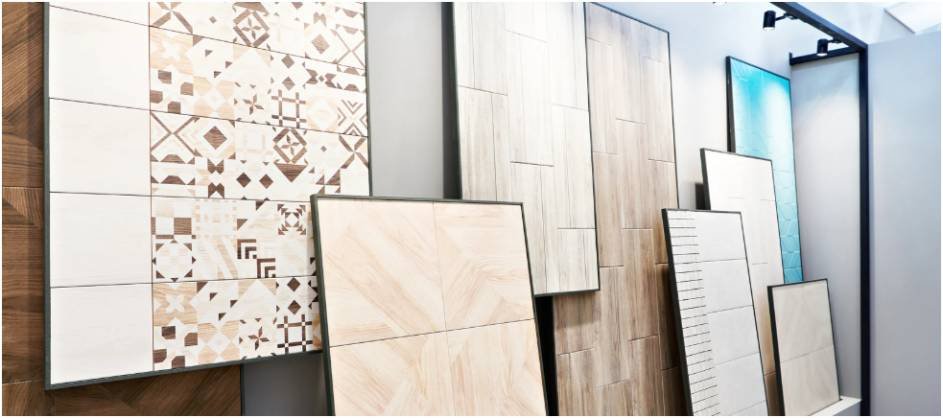

I think a hallway floor should do more than survive muddy shoes and grocery runs. It should make the walk between rooms feel welcoming. When choosing the best tile patterns for narrow hallways, I start with the floor’s proportions rather than a showroom display. A beautiful pattern can look completely different once doorways, baseboards, and tight corners surround it.
Diagonal squares, restrained herringbone, and simple rectangular layouts all deserve consideration. The right choice depends on whether you want more visual width, smoother flow, or decorative character.
Understand Your Hallway Before Choosing a Pattern
Measure the hallway at several points, including its narrowest section. Note closet doors, floor vents, stairs, and transitions into adjoining rooms. Older ranch homes and townhouses may have walls that are not perfectly parallel.
Then consider your main concern. A short passage might benefit from a layout that emphasizes length. An exceptionally long corridor may need a pattern that softens its tunnel effect. Neither approach physically enlarges the space, but each changes how the floor reads.
1. Diagonal Squares Break Up Straight Sightlines
Square tiles rotated 45 degrees create a diamond layout that interrupts the strong lines running between parallel walls. This can make the floor feel less confined.
Try warm ivory, pale gray, or limestone-look porcelain for a quieter appearance. Before installation, preview the perimeter cuts. Diagonal layouts require more cutting than a straight grid, so ask your installer to calculate the additional material rather than assuming a fixed waste allowance.
2. Herringbone Adds Movement Without Multiple Colors
Herringbone uses rectangular tiles meeting at right angles to create a zigzag arrangement. It brings character to a plain corridor without requiring decorative prints.
Smaller rectangles can reveal more complete repetitions across a narrow floor, although tiny pieces introduce more grout lines. Choose a restrained palette if you want the pattern to remain subtle.
Ask to see the proposed orientation marked on the floor. A forward-pointing arrangement emphasizes movement down the hallway, while another orientation changes its visual rhythm.
3. Crosswise Rectangles Emphasize Width
Rectangular tiles installed with their long edges across the hallway can draw attention from side to side. This makes them worth testing when a passage already feels excessively long.
A nominal 12-by-24-inch tile provides a useful starting point for a sample layout, but actual dimensions and grout joints determine the cuts. Avoid selecting a size simply because it is popular. Check whether it produces balanced pieces beside both walls.
4. Lengthwise Planks Create Continuous Flow
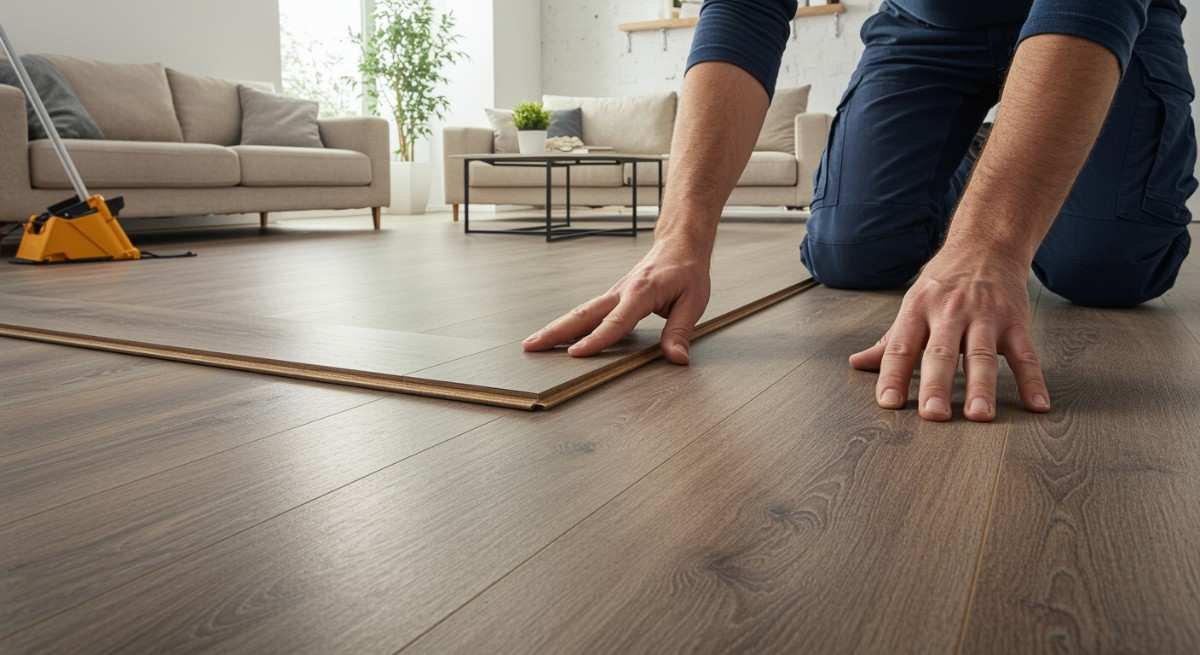
Wood-look porcelain planks running down the hallway establish a clear path between rooms. This arrangement suits homeowners who want continuity with nearby wood flooring.
However, lengthwise lines can also emphasize an already elongated corridor. Among the best tile patterns for narrow hallways, this option works especially well when uninterrupted flow matters more than reducing the impression of length.
Use moderate grain variation and coordinating grout to keep the floor from becoming visually fragmented.
5. Diagonal Checkerboard Adds Classic Character
Checkerboard combines alternating colors with an easy-to-recognize repeat. Turning the squares diagonally adds movement and breaks up a rigid wall-aligned grid.
Black and white creates strong contrast, while cream and taupe feels gentler. Neither palette is automatically correct for every small space.
Preview several complete repeats before ordering. A checkerboard floor should feel intentional at the front door, along the corridor, and where it meets adjacent flooring.
6. Basketweave Creates Detailed, Repeating Texture
Basketweave arrangements group rectangular pieces into an interlocking appearance. They offer decorative detail without relying on long directional lines.
For a narrow hallway, similar tile colors can make the pattern read as texture rather than a busy graphic. Contrasting inserts create a stronger statement.
Inspect mosaic sheets as well as individual pieces. Uneven spacing between sheets can interrupt the repeat, making careful alignment particularly important.
Mosaic patterns can also add decorative detail to outdoor flooring when the tiles and installation system are suitable for the conditions. If you are considering a similar patterned finish for a patio, plan the surface preparation, drainage, and tile arrangement before installation. This guide explains how to lay mosaic tile on an outdoor patio for a durable, well-planned result.
7. Small Geometric Patterns Suit Traditional Homes
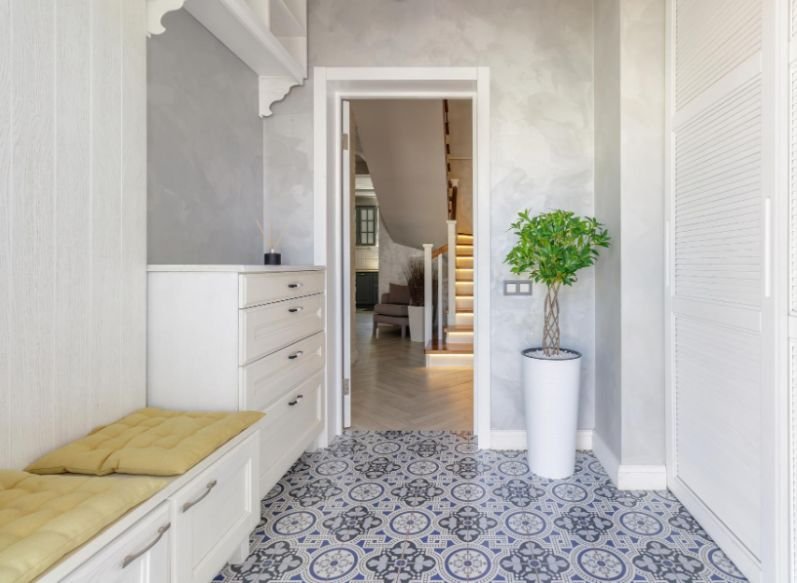
Victorian-inspired diamonds, octagons, and repeating motifs can complement historic row houses and older entryways. The important measurement is the complete decorative repeat, not just the individual tile.
A motif that disappears beneath both baseboards may look awkward. Borders also consume visible floor width. Choose a simpler repeat when space is tight, and test whether a border improves the composition before committing to one.
Make Tile Size and Grout Work Together
Balance Scale With Edge Cuts
Large tiles reduce the number of grout joints, but they still need a workable layout. Small tiles introduce more detail, yet can accommodate decorative repeats that larger pieces cannot.
Dry-lay samples across the actual hallway width. Compare centered tiles with centered joints in your drylaid arrangement to see which produces better edge cuts.
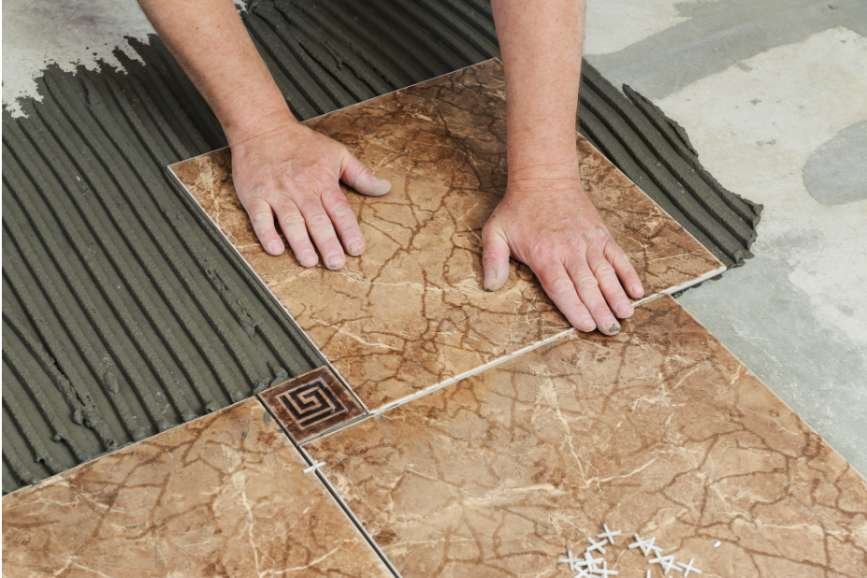
Before committing to a hallway pattern, map out the tile positions and check how the cuts will fall along both walls and at doorways. Testing the layout with actual tile dimensions and grout spacing can help prevent narrow edge pieces and awkward transitions. Follow these tips on how to plan a tile layout before installation to refine the arrangement before installation begins.
Choose Grout Contrast Deliberately
Grout close to the tile color softens the grid. Contrasting grout highlights every joint and makes the arrangement more prominent.
View cured grout samples beside your tile under daytime and evening lighting. Printed color charts alone may not show the finished relationship accurately.
Plan for Everyday Use
Select tiles approved for floor use and suitable for the entrance conditions. Wet shoes, tracked-in grit, pets, and cleaning habits matter as much as appearance. A matte finish alone does not establish slip resistance.
Have the installer check floor preparation, transitions, door clearance, and the manufacturer’s layout instructions before installation begins.
If your hallway connects directly to the kitchen, consider how the tile colors, finishes, and flooring transitions will work together across both spaces. Coordinating these details can create a more consistent look and help the hallway feel connected to the rest of your home. Explore these kitchen renovation ideas for inspiration when planning finishes and design choices for adjoining areas.
Frequently Asked Questions
1. What are the best tile patterns for narrow hallways?
Diagonal squares, subtle herringbone, and crosswise rectangles are useful starting points. Choose according to hallway proportions, lighting, and the appearance you want.
2. Should tiles run across or along the hallway?
Across emphasizes width; lengthwise emphasizes continuity and length. Compare both with samples before deciding.
3. Can patterned tiles work in a small hallway?
Yes. Check that enough of the motif remains visible and balance a decorative floor with quieter surrounding finishes.
My Final Take
I would choose the layout only after viewing samples from the doorway. That perspective reveals how direction, grout, and edge cuts work together. A carefully planned floor can give even a modest hallway a more comfortable, considered appearance.
I also recommend leaving the samples in place throughout the day. A pale tile may look warm beside the front door but cooler beneath ceiling lights. Seeing those changes makes it easier to choose a combination that works with your walls, trim, and neighboring floors.