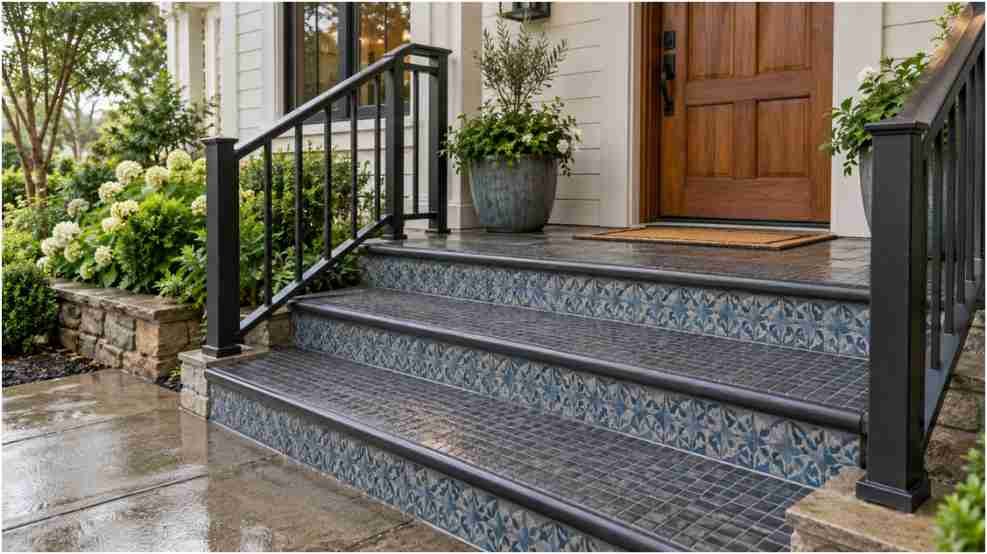
Morning dew, autumn leaves, and freezing winter rain turn standard front entry steps into dangerous hazards. When I rebuilt my porch entryway after a bad slip on wet bluestone, I chose slip resistant exterior mosaic tiles for front entryway steps to solve the problem permanently. Small-format mosaics naturally prevent falls while providing exceptional architectural curb appeal.
Achieving a safe exterior staircase requires understanding wet traction ratings, weatherproofing specifications, and durable edge trims. Here is how I select, detail, and install exterior mosaics that look immaculate and keep your footing rock-solid through wet winters.
+——————————————————————————–+
| TREAD CROSS-SECTION |
| |
| 1/4″ per ft. Pitch (Moisture Runoff) —> |
| =========================================== \ |
| [ Textured Matt Porcelain Mosaic Treads ] \ |
| ——————————————- | |
| [ ANSI A118.15 Polymer Thin-Set Bed ] | |
| ——————————————- +–> Integrated Mortar-Set |
| [ Uncoupling Waterproofing Membrane ] | Aluminum Nosing Profile |
| ——————————————- | (Caps raw tile corner) |
| [ Sloped Reinforced Concrete Substrate ] / |
| =========================================== / |
| | |
| | <— Decorative Vertical Riser |
| | (Glazed, Talavera, or Accent Mosaic) |
+——————————————————————————–+
The Physics of Traction: Why Exterior Mosaics Outperform Large Slabs
Large-format smooth stone or polished pavers trap a thin sheet of water across their surface during rainstorms. When your shoe heel strikes that trapped water film, micro-hydroplaning occurs. Small-format mosaics eliminate this risk through surface mechanics.
DCOF Ratings and the Grout-Line Grip Advantage
Slip resistance hinges on the Dynamic Coefficient of Friction (DCOF). The Tile Council of North America (TCNA) specifies ANSI A326.3, which requires a minimum wet DCOF value of 0.42 for level interior spaces. For exterior walkways and steps exposed to direct weather, you need a wet DCOF of 0.60 or higher.
Mosaics offer a distinct structural advantage beyond their surface texture: grout line frequency. A sheet of 2×2-inch mosaic tiles introduces roughly 12 linear feet of recessed grout lines per square foot. These recessed joints act as drainage channels. They channel away water underfoot and allow shoe soles to grip positive edges rather than skating over surface water.
Avoiding the Glazed Ceramic Trap
Never install standard glazed ceramic mosaics on an exterior step tread. Glazed finishes lack mechanical grip once wet, and thin surface glazes chip under boot grit. Stick strictly to unglazed porcelain, textured through-body vitrified tiles, or flamed stone mosaics for horizontal step surfaces.
Selecting the Right Material for Year-Round Freeze-Thaw Resistance
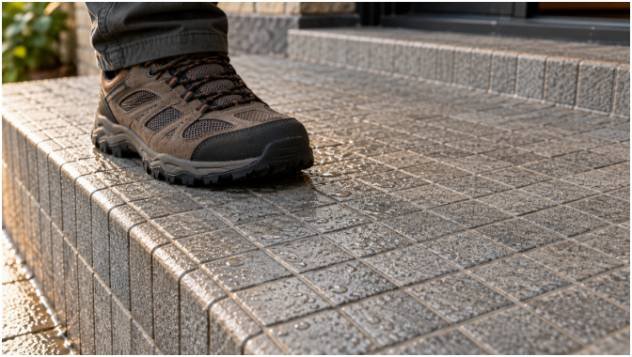
Outdoor steps endure punishing thermal cycling, ground movement, and standing water. Material selection dictates whether your steps last decades or delaminate in two seasons.
WATER ABSORPTION COMPARISON
Standard Ceramic | [========== 3.0% to 7.0% ==========] (High Frost Risk)
Dense Quarry Tile | [==== 1.0% to 3.0% ====] (Moderate Risk)
Porcelain / DGVT | [= <0.5% =] (Freeze-Thaw Proof)
+————————————+
0% 3% 7%
Vitrified Porcelain vs. Natural Stone Mosaics
Porcelain mosaics are engineered under immense pressure and fired at temperatures topping 2,200°F (1,200°C). This process produces an ultra-dense tile body impervious to moisture. Natural stone mosaics like slate, split-face granite, or tumbled travertine offer rustic aesthetics, but they contain natural fissures.
Water seeps into these internal veins, expands during hard freezes, and splits the stone. When using slate or travertine outdoors, seal the stone annually with a penetrating silane-siloxane sealer.
Why Water Absorption Rates Below 0.5% Matter
Outdoor tiles must carry an impervious rating under ASTM International C1026 standards, certifying a water absorption rate of 0.5% or lower. If moisture penetrates a porous tile body and hits sub-zero temperatures, the internal ice crystal expansion pops the tile right off the mortar bed. Vitrified porcelain resists this freeze-thaw damage effortlessly.
Design Architecture: Balancing Grip on Treads with Art on Risers
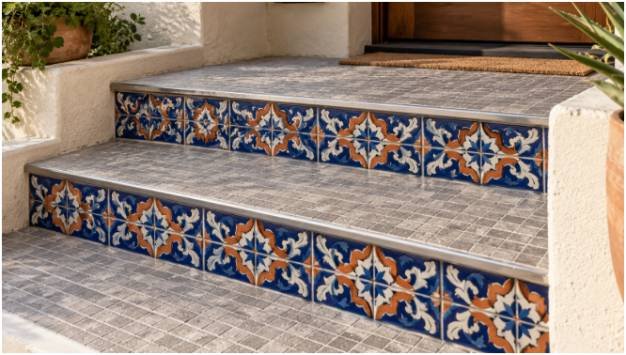
You do not need to sacrifice visual personality for wet-weather safety. The golden rule of staircase design is separating functional needs between treads and risers.
Reserve your treads exclusively for textured, matte-finished, high-DCOF mosaic sheets in neutral slates, charcoals, or sandy earth tones. This keeps your primary contact zone safe and compliant.
STEP ANATOMY & SURFACE STRATEGY
+——————————-+ <– Horizontal Tread
| HIGH-TRACTION MATTE MOSAIC | • DCOF >= 0.60
| (Unglazed Porcelain / Slate) | • High grout density
+——————————-+
| | <– Vertical Riser
| DECORATIVE ACCENT MOSAIC | • Bold colors & patterns
| (Glazed / Hand-Painted Tile) | • Zero slip requirements
+——————————-+
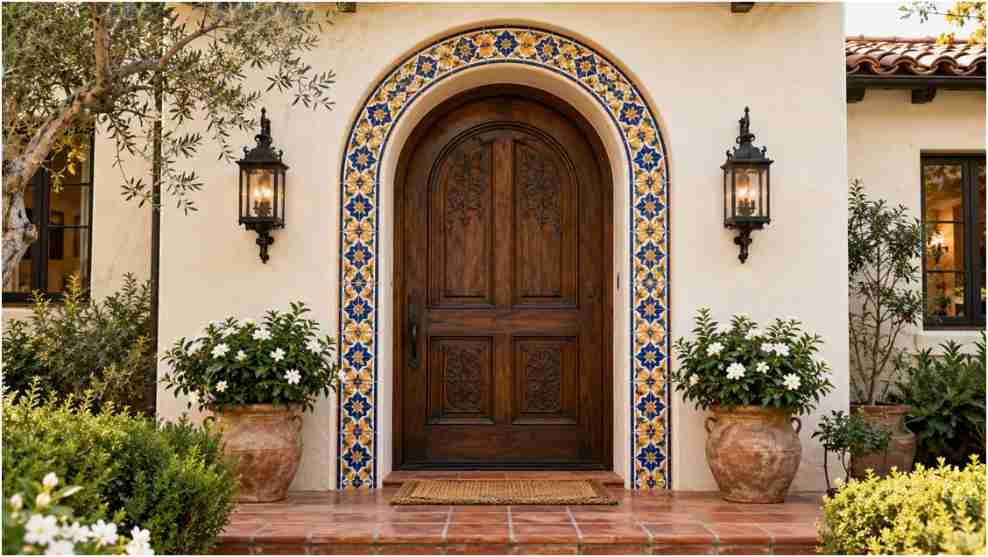
The vertical stair riser takes zero direct foot friction. Use this surface to showcase vibrant patterns, such as a traditional mexican ceramic tile front porch stair riser.
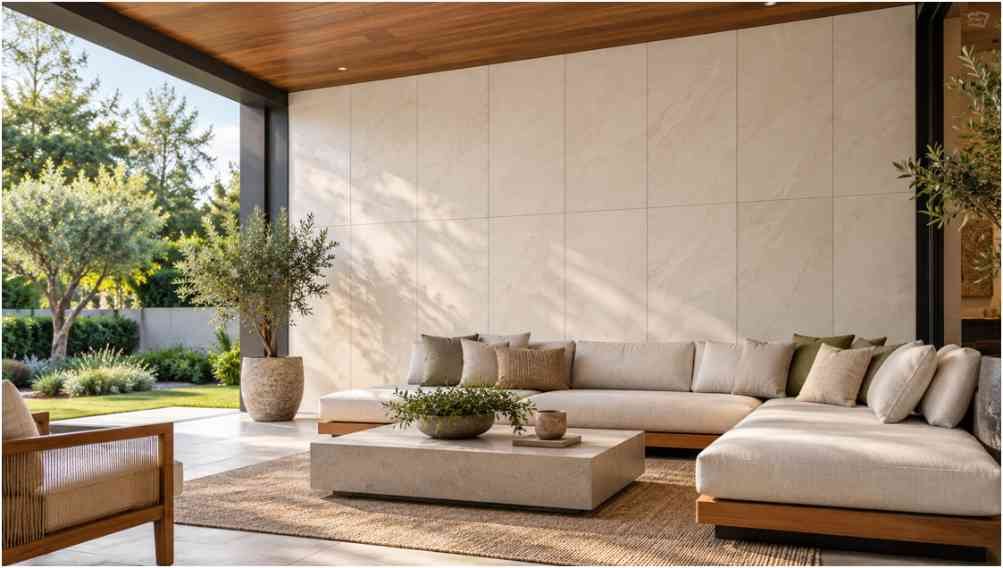
The bold Mediterranean patterns elevate curb appeal without compromising footing. You can carry that visual language across your facade by tying the pattern into an adjacent covered patio exterior accent wall tile layout.
Step Edge Mechanics: Mortar-Set vs. Retrofit Nosing Profiles
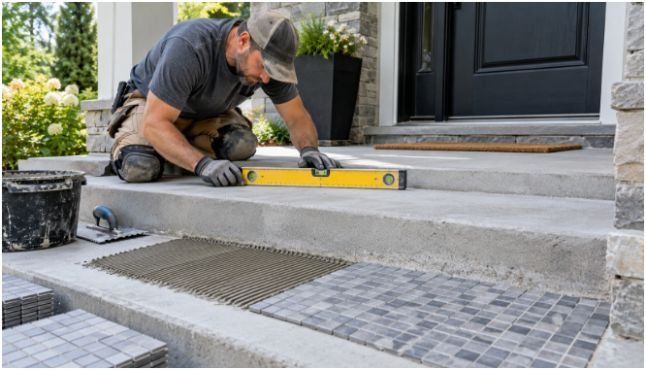
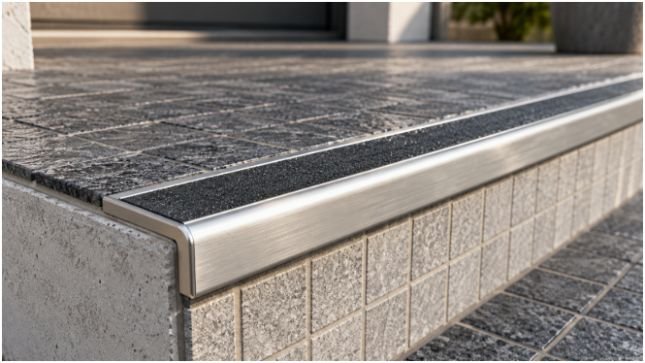
The outer lip of a step tread absorbs up to 60% of foot impact energy during descents. Because mosaic tiles consist of individual small pieces, an unprotected tile edge will shear off under heavy footsteps. Dedicated edge trims are mandatory.
+———————————–+———————————–+
| MORTAR-SET NOSING PROFILE | SCREW-DOWN RETROFIT NOSING |
+———————————–+———————————–+
| • Flange anchors beneath tile bed | • Surface-mounted over cured tile |
| • Absolutely flush walking surface| • Sits 2–4mm proud of the step |
| • Zero surface screw penetrations | • Requires mechanical masonry plugs|
| • Installed during initial build | • Fast fix for existing stairs |
| • Best for new builds & renovations| • Ideal for high-wear repairs |
+———————————–+———————————–+
Integrated Profiles for New Builds
Mortar-set profiles (such as aluminum Schluter-TREP or Dural systems) feature a wide, perforated anchoring leg embedded directly into the thin-set bed beneath the mosaic tread. The metal nose wraps over the outer edge, shielding the top edge of the riser and the front edge of the mosaic tile. This creates a flush, trip-free transition that cannot work loose over time.
Retrofit Edge Guards for Existing Masonry
If you are adding traction to pre-existing tiled steps, screw-down aluminum nosing profiles with serrated top grooves or vulcanized rubber inserts provide immediate mechanical grip. Bed the underside of the retrofit metal strip in heavy-duty exterior polyurethane adhesive.
Fasten it down with 316-grade stainless steel screws driven into masonry anchors. The adhesive prevents water from pooling beneath the aluminum bar, preventing winter ice heave.
Outdoor Substrate Prep and Grout Selection Rules
Even premium mosaic tiles will fail quickly over a poorly prepped concrete foundation. Outdoor installations require strict water control and specialized chemical bonding agents.
WATER SHEDDING ANGLE
Level Line: —————————–
Tread Pitch: \ 1/4″ Fall Per Foot ——–>
\___________________________
Sloping for Runoff
Standing water ruins mortar bonds and forms hidden ice sheets. According to the International Code Council (ICC) residential building codes, exterior stair treads must direct water away from the entryway threshold.
Build a pitch of 1/4 inch per foot into your concrete base before laying any tile. Never try to build this slope out of thin-set mortar. Mortar applied too thick shrinks unevenly as it cures, creating hollow voids under the tiles where trapped water freezes and pops sheets loose.
Epoxy vs. Polymer-Modified Cementitious Grout
Standard sanded cement grouts absorb moisture, degrade under de-icing salts, and sprout mildew. For exterior entryways, use either an ANSI A118.7 high-performance cementitious grout modified with flexible acrylic latex, or a 100% solids epoxy grout (ANSI A118.3).
Epoxy grout cures completely non-porous. It repels rain, locks individual mosaic tesserae into a solid matrix, and withstands seasonal pressure washing without eroding.
Step Up Your Curb Appeal: The Final Takeaway
Transforming your front steps with slip-resistant exterior mosaic tiles gives you an entryway that handles wet weather effortlessly while boosting your home’s exterior appeal. For a lasting installation, pair impervious porcelain mosaics (DCOF 0.60 or higher) on the treads with an integrated mortar-set nosing profile and waterproof epoxy grout.
Before mixing your first batch of thin-set, check your concrete steps with a four-foot level. If water currently ponds near your front threshold, grind down high spots or apply an exterior-rated polymer leveling compound to establish your 1/4-inch slope.
Frequently Asked Questions
1. What DCOF rating is required for exterior steps?
Exterior steps require a Dynamic Coefficient of Friction (DCOF) rating of 0.60 or higher when measured wet under ANSI A326.3 standards.
2. Can I install glass mosaic tiles on outdoor step treads?
No, glass tiles become slick when wet and chip easily under hard shoe impacts, making them suitable only for vertical risers.
3. Which grout holds up best for outdoor mosaic stairs?
Two-part epoxy grout or ANSI A118.7 polymer-modified exterior cement grout provides the necessary waterproof protection against freeze-thaw cycles.
4. Do mosaic tiles need an uncoupling membrane outside?
Yes, installing an exterior-rated waterproof uncoupling membrane prevents substrate freeze-thaw stress cracks from traveling upward into your mosaic surface.