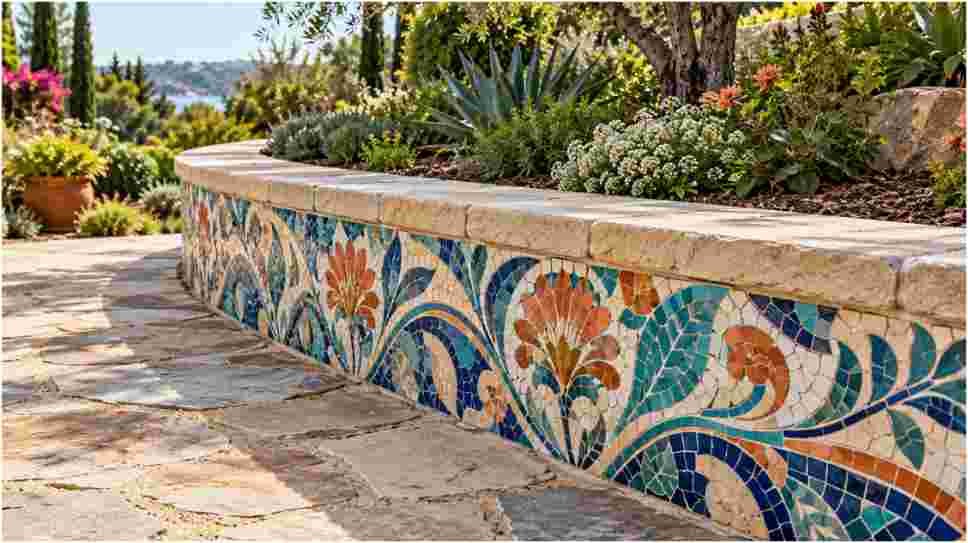
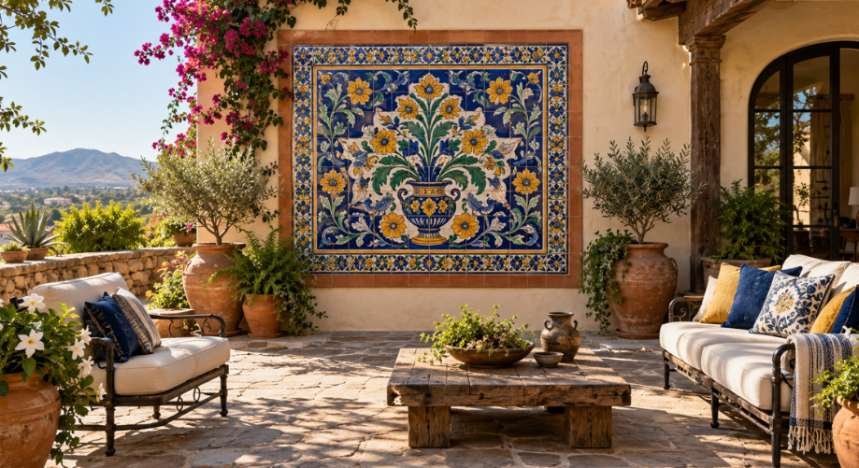
Bland outdoor walls drain the energy from an otherwise beautiful backyard. Over the past eight years of designing outdoor living spaces, I have replaced dozens of flat, washed-out stucco partitions with handcrafted clay surfaces. Exploring vibrant mexican talavera mosaic tile ideas for patio walls offers the fastest way to infuse warmth, architectural contrast, and historic craftsmanship into your home. Authentic Talavera brings rich mineral glazes and raw character that machine-pressed tiles cannot replicate.
A patio wall demands more than just aesthetic appreciation. It requires thoughtful pattern design and rigid moisture defense. Clay body tiles react dynamically to heat, moisture, and ground settlement. I will share my favorite design layouts alongside the critical physical details needed to keep your outdoor wall intact for decades.
Curated Talavera Layout Concepts That Elevate Outdoor Walls
A plain expanse of garden wall often feels monolithic. You do not need to cover every square inch in cobalt blue to create visual weight. The secret lies in framing, scale, and strategic breaking of patterns.
+————————————————————–+
| SLOPED COPING STONE (DRIP EDGE) |
+————————————————————–+
| |
| [ ARCHED NICHE ] [ CENTRAL TILE MURAL ] |
| Geometric Patterns Framed by Terracotta |
| |
+————————————————————–+
| WAINSCOT DADO BAND (4 Courses of Alternating Talavera Tile) |
+==============================================================+
| FINISHED PATIO GRADE LEVEL |
+————————————————————–+
The Trencadís Ribbon: Breaking Uniform Squares
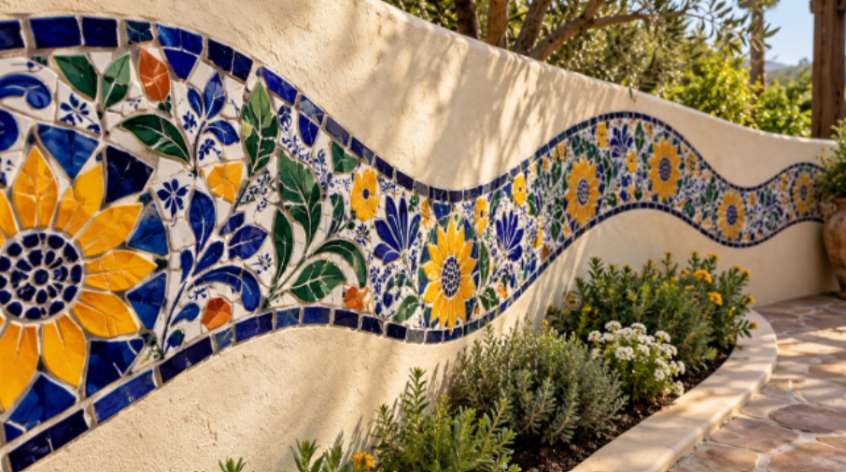
Uniform square grids sometimes look stiff against curved garden beds or flagstone flooring. To counter this, I borrow the Catalan trencadís technique. I deliberately crack standard 4×4-inch Talavera tiles into organic shards using a light mosaic hammer.
I set these colorful fragments into undulating bands that meander horizontally across neutral stucco walls. Interspersing shards of sunflower yellow, cobalt, and copper green creates fluid movement. You can weave these ceramic ribbons alongside modern [glass mosaic tile cladding patterns] for contrasting textures. The glossy, reflective glass magnifies the rustic, milky tin glaze of the handmade Mexican clay.
Arched Inset Niches with Terracotta Relief
Flat walls benefit tremendously from structural depth. Cutting shallow, 3-inch-deep arched niches into concrete block walls creates natural focal points for patio seating zones.
I line the back curved wall of the niche with rhythmic Talavera motifs, like the traditional four-petal flower or the Flor de Liz. Framing the perimeter of the arch with raw, unglazed terracotta bullnose tiles grounds the busy painted design. Installing a warm brass downlight inside the arch brings the hand-painted cobalt patterns to life at sunset.
For a coordinated exterior design, carry the same colorful ceramic detailing from decorative wall niches to the entrance with these Mexican ceramic tile front porch stair riser ideas, which can help tie together the home’s outdoor features.
Low-Profile Wainscoting with Sloped Coping
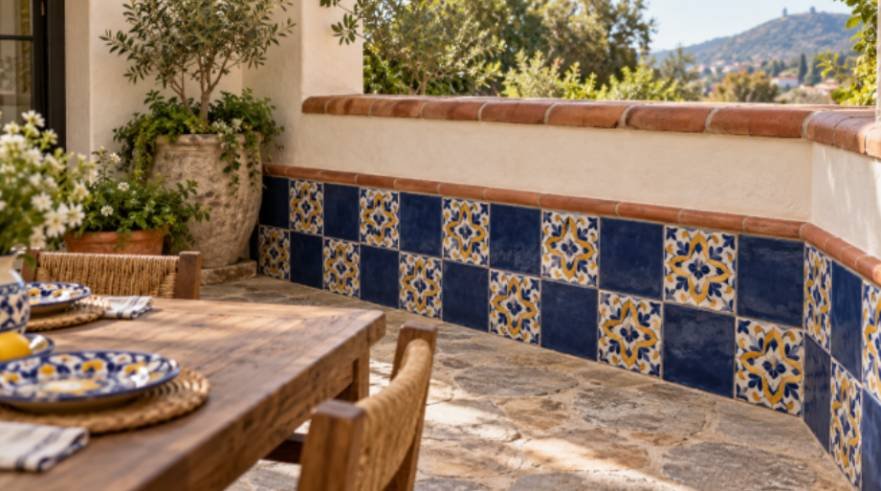
Lounge chairs and outdoor dining tables often bump against patio walls, leaving scuffs on exterior paint. Installing a four-course Talavera wainscot along the bottom third of the wall solves this problem cleanly.
Alternating solid washed-navy tiles with intricate geometric squares keeps the perimeter grounded without overwhelming the patio furniture. I always finish the top course with a sloped limestone or fired-clay coping stone. This architectural lip keeps rainwater from pooling on top of the tiles and forces runoff away from the grout line.
To carry the same handcrafted style beyond patio walls, consider these Talavera tile outdoor staircase risers for adding colorful ceramic accents to exterior steps and creating a coordinated outdoor design.
The Freeze-Thaw Problem: Real-World Installation Physics
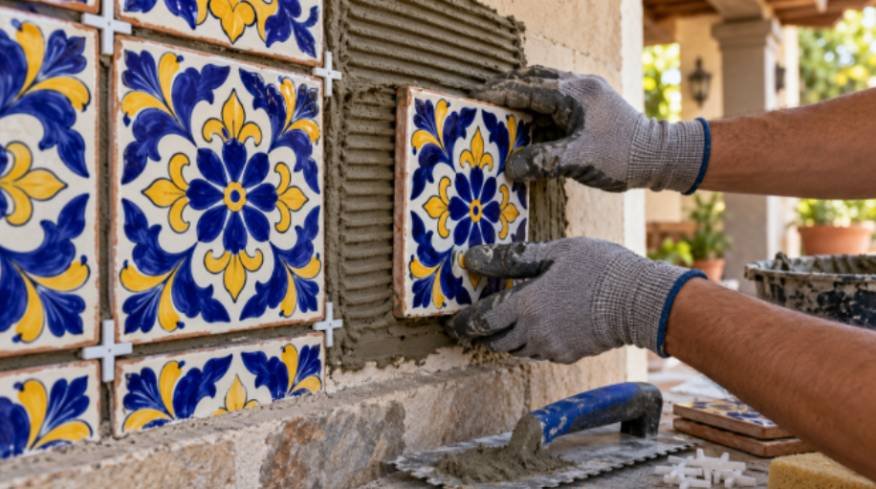
Traditional Mexican Talavera is an earthenware ceramic fired at relatively low temperatures (around 1,800°F). According to historical craftsmanship standards cataloged by UNESCO Intangible Cultural Heritage, authentic Talavera relies on natural river clays and traditional tin-opacified glazes. This artisanal process produces a porous clay body.
RAIN & SNOW RUNOFF
│
▼
┌──────────────┐
│ Glaze Face │ <– Hairline micro-crazing allows moisture entry
├──────────────┤
│ Porous Clay │ <– Trapped water expands by 9% when frozen
│ Body (>7%) │
├──────────────┤
│ Mortar Bed │ <– Voids trap condensation, shearing tile from wall
└──────────────┘
The 7-Percent Absorption Rule and Spalling
Porous clay absorbs water readily. The Tile Council of North America (TCNA) categorizes tile vitrification based on water absorption rates. Authentic Talavera typically absorbs between 7% and 12% water by weight, classifying it as non-vitreous.
When absorbed moisture freezes, it expands by roughly 9%. In cold climates, this subsurface ice shears the decorative glaze off the front of the tile, a failure known as spalling. If your region experiences hard freezes (USDA Hardiness Zone 7 and below), install authentic Talavera exclusively on covered patio walls protected from driving precipitation. Alternatively, source high-fire porcelain tiles screen-printed with classic Talavera motifs for fully exposed exterior perimeters.
Before installing traditional Talavera in a cold climate, review these practical tips on how to protect Talavera tile from freezing weather to better understand moisture control and winter protection for decorative outdoor surfaces.
Mortar Chemistry: Why Type M Fails Talavera
Standard masonry mortar or cheap Type M mixes should never touch decorative exterior tiles. Standard mortars shrink as they cure, pulling on the fragile earthenware core. They also lack the polymer flexibility required to handle the expansion cycles of clay baking under midday desert sun.
Always specify an ANSI A118.15-rated polymer-modified thin-set mortar. Industry documentation from Laticrete Technical Services highlights that high-performance modified mortars offer superior shear bond strength across severe exterior thermal swings. The polymer additives create a flexible microscopic lattice that flexes during hot afternoons, keeping your tiles securely anchored.
Field-Tested Installation Workflow for Masonry Surfaces
Installing Talavera on an exterior wall requires strict surface preparation. If you want to [install mosaic tiles on outdoor concrete wall] structures permanently, skip the pre-mixed mastics entirely. Follow this field-tested method:
- Substrate Preparation: Chip away loose paint, efflorescence, or crumbling stucco. The concrete or cinder block base must be structurally sound, dry, and mechanically abraded.
- Apply an Elastomeric Waterproofing Layer: Roll two generous coats of an exterior-rated liquid waterproofing and anti-fracture membrane over the entire wall. This prevents ground moisture from migrating into the back of your tile assembly. Agricultural extension research from the University of Arizona Cooperative Extension confirms that controlling masonry water intrusion prevents premature salt bloom and surface delamination.
- Back-Butter Every Single Tile: Trowel the wall with a 1/4-inch square-notched trowel, then skim a flat layer of mortar over the entire back of each tile. Authentic Talavera backs are slightly concave and irregular. Full mortar contact eliminates air pockets where condensing water could collect and freeze.
- Maintain Wide Grout Lines: Keep joints between 1/4-inch and 3/8-inch wide. Hand-molded tiles vary slightly in size; wide grout lines absorb dimensional irregularities and relieve lateral thermal stress.
- Epoxy or Fortified Sanded Grout: Pack joints tightly with an ANSI A118.7 high-performance cementitious grout or an exterior-grade epoxy grout. Epoxy cures into an impervious solid, sealing the primary entryway for rainwater.
- Apply Breathable Penetrating Silane-Siloxane Sealer: After the grout cures for 72 hours, spray the entire wall with a breathable silane-siloxane penetrating sealer. This invisible barrier causes water to bead on the surface while allowing internal vapor to escape harmlessly.
Frequently Asked Question
1. Can Talavera tiles stay outside during freezing winters?
Traditional earthenware Talavera will crack during hard freezes unless protected under deep overhangs and sealed completely against moisture penetration.
2. How do I clean moss and mineral buildup off outdoor Talavera?
Scrub the surface with warm water, mild biodegradable dish soap, and a soft-bristled nylon brush; avoid acidic cleaners that strip the tin glaze.
3. Do I need special screws or anchors to hang Talavera wall plaques?
Mount decorative Talavera plaques using exterior-grade stainless steel masonry anchors seated directly into mortar joints to prevent cracking the ceramic.
4. How often should outdoor patio tile grout be resealed?
Reapply a breathable, penetrating silane-based sealer to outdoor grout joints every twelve to eighteen months before seasonal rains begin.
Ditch the Dull Stucco and Start Laying Clay
Blank garden walls drain the life from your outdoor living areas. Handcrafted Talavera turns sterile masonry into an expressive, sun-drenched courtyard full of warmth and artisan history. Map out your focal points, verify your local freeze conditions, and insist on premium polymer-modified mortars. Order your sample tiles, set your layout grid on the patio floor, and start transforming your backyard walls this weekend.