

The gritty material sitting in your gutters can look harmless, but it can tell you a lot about what is happening on your roof. I usually look at granule buildup as an early warning sign rather than an immediate reason to panic. A small amount can come from normal shingle weathering, while sudden or repeated accumulation may point to hail impact, aging asphalt, poor gutter drainage, or damaged shingles.
If you are trying to figure out what to do about granules collecting in gutters, start with the bigger picture instead of focusing only on the debris. The roof’s age, recent storms, gutter condition, downspout discharge, and visible changes in the shingles can help you determine whether shedding is routine or a sign the roof needs closer attention.
Why Are Shingle Granules Ending Up in My Gutters?
Asphalt shingles have a surface layer of crushed mineral granules. These particles help shield the asphalt from ultraviolet exposure, weathering, and heat while also contributing to the roof’s color and appearance.
As shingles age, some granules naturally loosen. Rainwater carries them down the roof and into the gutter system. Because gutters collect runoff from large roof sections, even gradual granule loss can eventually create noticeable piles.
That is why I would never judge roof condition based only on how much grit is sitting in one gutter. Drainage patterns, roof size, gutter pitch, cleaning frequency, and recent rainfall can all affect how much material collects in one place.
Should I Remove Roof Granules From the Gutters?
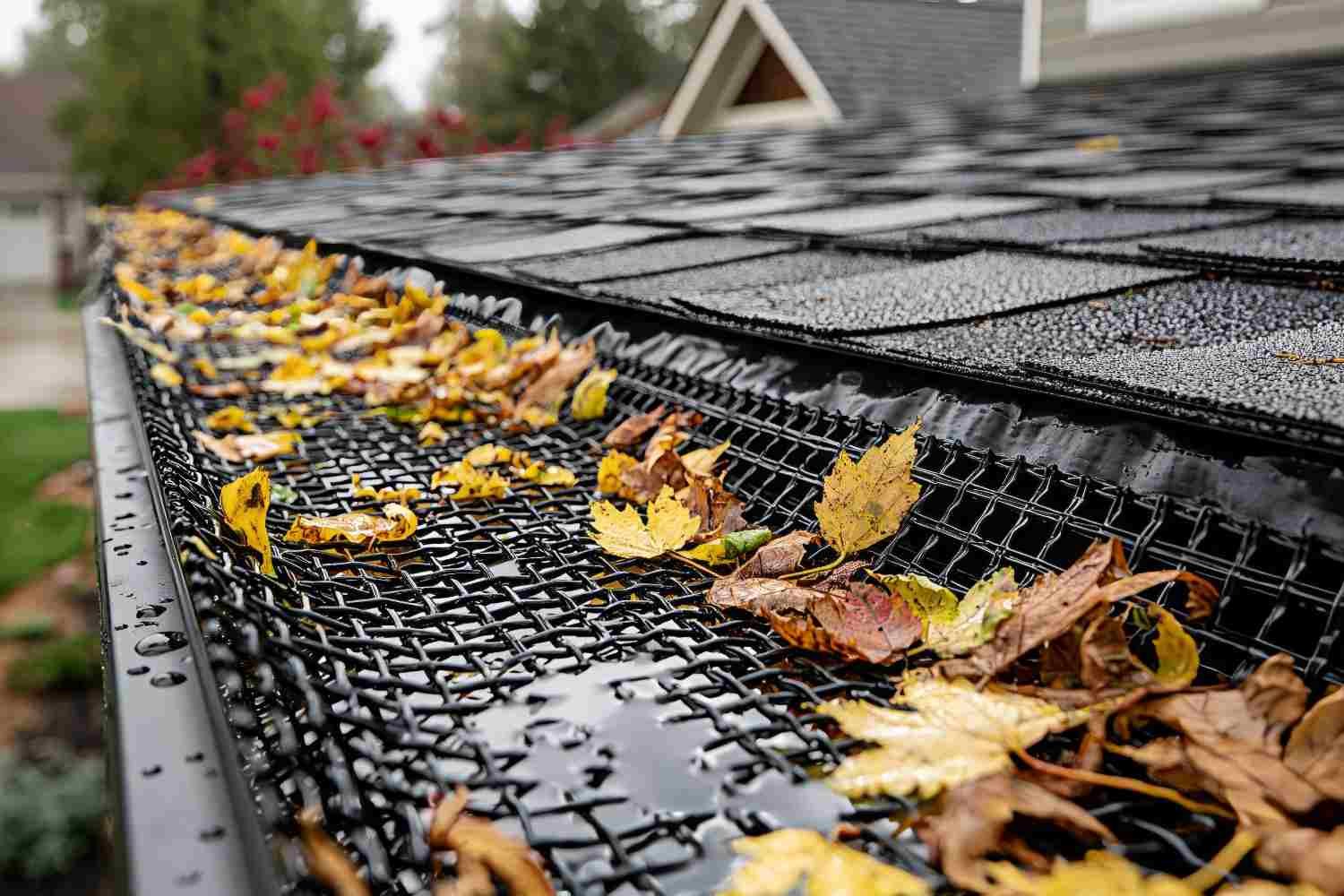
Yes. I would remove accumulated granules during normal gutter maintenance.
The granules themselves are small, but they are relatively heavy. When they mix with leaves, roof debris, dirt, and twigs, they can contribute to sediment buildup and slow water movement toward the downspouts.
Poor drainage can lead to overflowing gutters and additional moisture around fascia, siding, roof edges, landscaping, and the foundation.
Cleaning the gutter will not stop shingle granule loss, but it does prevent the debris from becoming a separate drainage problem.
Check Whether Your Gutters Are Sagging
If most of the granules collect in one particular section, I would also examine the gutter alignment.
Sagging or poorly pitched gutters can create low areas where sediment settles instead of moving toward the downspout. A concentrated pile does not always mean that one roof section is deteriorating faster.
After cleaning, watch whether water moves smoothly through the gutter during the next rainfall.
Is Granule Loss Normal on a New Roof?
Some shedding can be completely normal on newer asphalt shingles.
Manufacturers apply more granules than the asphalt surface permanently holds, so loose particles may remain after installation. Rain and normal weather exposure gradually wash these excess granules into the gutter.
If the shingles still have consistent surface coverage and the amount of shedding decreases over time, I generally would not consider a small amount of granules alarming.
However, heavy shedding, large bare areas, or continued unusual loss on a relatively new roof deserves further evaluation.
What Does Granule Loss Mean on an Older Roof?

Roof granule loss becomes more significant as shingles age.
Years of sunlight, heat, freezing weather, storms, and seasonal temperature changes can gradually harden and weaken asphalt shingles. As the surface deteriorates, it becomes less capable of retaining granules.
An older roof that consistently produces increasing quantities of granules may be approaching the point where repair or replacement becomes necessary.
Age alone does not prove roof failure, though. I would also look at curling, cracking, exposed asphalt, leaks, missing shingles, and uneven roof coloring before reaching that conclusion.
Can Hail and Storms Cause Sudden Granule Loss?
Yes. Severe weather can accelerate granule loss. Hailstones can strike the shingle surface and dislodge granules, while high winds can lift shingles or move branches and debris across the roof.
If you suddenly notice heavy piles after a major US hailstorm or wind event, document the condition before cleaning everything away. Take photos of the gutters, downspouts, visible roof surfaces, vents, flashing, and any dents or impact marks you can safely observe. This kind of documentation is especially useful when preparing for roof inspection, because it gives the roofing professional a clearer picture of when and where the damage appeared.
That documentation can help a roofing professional evaluate whether the change is consistent with storm-related damage.
Before filing an insurance claim, review your policy and consider obtaining a professional inspection. Granule accumulation alone may not prove covered storm damage.
How Can I Tell Whether Granule Loss Is Serious?
I pay more attention to visible changes in the shingles than to a specific quantity of loose granules.
Dark, shiny, or bald areas may indicate that the mineral surface has worn away and exposed more of the underlying asphalt. Cracked or curled shingles are another sign that the roofing material may be becoming brittle.
Interior water stains, repeated roof leaks, lifted shingles, or missing sections make the situation more urgent.
There is no universal rule stating that a certain number of cups or a specific depth of granules automatically means roof failure. Trends are more useful than a single measurement.
Monitor Your Downspouts After Rain
Another simple diagnostic step is to watch where your downspouts discharge.
After cleaning the gutters, check the ground following several rainstorms. A light dusting of granules may reflect normal shedding, particularly on a newer roof.
Repeated heavy deposits are more concerning, especially if the amount appears to be increasing.
Taking photos after each inspection can make changes easier to recognize.
Can Damaged Shingles Be Repaired Instead of Replacing the Roof?

Sometimes.
If granule loss is limited to a small area damaged by a tree branch, maintenance work, or another isolated event, a roofing contractor may be able to replace individual shingles.
Widespread deterioration is different. If large portions of the roof contain bald spots, curling edges, cracking, recurring leaks, or extensive granule loss, replacement may make more financial sense than repeated repairs.
I would base that decision on the overall roof condition rather than the presence of gutter granules alone.
Do Roof Rejuvenation Treatments Help With Granule Loss?
Some companies offer asphalt-shingle rejuvenation products that are marketed as restoring flexibility to aging shingles.
Products such as Roof Maxx and GoNano are examples homeowners may encounter when researching options for older roofs.
These treatments should not be considered replacements for structurally damaged shingles, widespread storm damage, active leaks, or roofing that has already deteriorated beyond repair. Performance, warranties, eligibility, and expected service-life extensions also vary by product and roof condition.
If I were considering one, I would compare independent evidence, warranty terms, roof condition, and replacement costs before deciding.
Are SBS-Modified Asphalt Shingles Worth Considering?
When a roof eventually requires replacement, homeowners in hail-prone or temperature-variable parts of the United States may encounter SBS-modified asphalt shingles.
SBS-modified shingles contain polymer-modified asphalt designed to improve flexibility and impact resistance compared with conventional asphalt formulations.
Performance still varies by manufacturer and product line, so I would compare impact ratings, wind ratings, warranties, local building requirements, and contractor recommendations rather than choosing shingles solely because they use SBS technology.
What to Do About Granules Collecting in Gutters After You Clean Them
Once the gutter is clear, continue monitoring rather than assuming the issue has been solved.
For what to do about granules collecting in gutters, I recommend comparing future buildup, watching downspout discharge, noting recent storms, and inspecting the roof from the ground with binoculars or a phone zoom lens.
Avoid walking on an aging or damaged roof yourself. Besides the fall hazard, foot traffic can loosen additional granules from brittle shingles.
If shedding becomes heavier or you notice bald areas, curling, cracking, missing shingles, or leaks, arrange a professional roof inspection.
Frequently Asked Questions (FAQs)
Is it normal to find roof granules in gutters?
Yes. Small amounts can be normal, particularly on newer asphalt shingles or roofs experiencing gradual weathering. Sudden or rapidly increasing loss deserves closer attention.
Can roof granules clog my gutters?
They can contribute to buildup when mixed with leaves, dirt, and other debris. Regular gutter cleaning helps maintain drainage.
Why is my new roof shedding granules?
New shingles commonly contain loose excess granules left from manufacturing. Rain can wash these particles into the gutter during the roof’s early weathering period.
Does granule loss mean I need a new roof?
Not automatically. Roof age, bald areas, cracking, curling, leaks, storm history, and the extent of deterioration matter more than gutter granules alone.
Should I file an insurance claim after finding granules following hail?
Not based only on granules. Document the condition, look for other storm-related damage, review your policy, and consider a professional inspection before deciding.
What are the warning signs of excessive granule loss?
Repeated heavy buildup, bald or dark shingles, exposed asphalt, cracking, curling, missing shingles, and leaks are more concerning than occasional light shedding.
Final Thoughts
I treat roof granules as an early clue, not an automatic reason to replace a roof.
The smartest approach is to clean the gutters, check the drainage system, document what you find, and monitor whether the shedding continues. The age of the shingles and the presence of storm damage, bald spots, cracking, curling, or leaks provide much more context than the granules alone.
When deciding what to do about granules collecting in gutters, focus on changes over time. A little shedding may be normal. Repeated heavy accumulation combined with visible shingle deterioration deserves professional attention before a small roofing issue becomes an expensive water-damage problem.