An acid spill can alter natural stone in seconds, and the pale or cloudy patch it leaves behind may not be a stain at all. On marble, limestone, travertine, and other calcium-rich stones, acid can actually dissolve part of the surface.
That distinction matters if you are figuring out how to repair acid damaged outdoor stone mosaic tiles. A cleaner cannot remove stone that has already been chemically eaten away. Light etching may be refinished, small pits may be repaired, and badly damaged mosaic pieces often need replacement. The safest repair starts with identifying exactly what happened before reaching for another chemical.
Why Acid Leaves Outdoor Stone Looking Burned or Bleached
Natural stone does not respond uniformly to acidic products. Marble, limestone, travertine, and many decorative stones contain substantial amounts of calcium carbonate. The Natural Stone Institute explains that calcium-carbonate stone is sensitive to acidic solutions and recommends mild, non-acidic cleaners for routine maintenance.
That sensitivity explains why vinegar, lemon juice, acidic patio cleaners, rust removers, and masonry acids can leave a smooth mosaic looking dull or chalky.
The U.S. Geological Survey describes the same chemistry on a much larger scale: sulfuric and nitric acids react with calcite in marble and limestone, dissolving material and producing roughened surfaces and loss of detail. For additional background on acid-related stone deterioration.
Siliceous stones such as many granites are generally more acid resistant, but that does not make them immune. Strong acids can attack minerals, damage finishes, remove sealers, and affect surrounding grout. The Natural Stone Institute specifically warns that hydrofluoric-acid-containing products can attack even granite and quartzite.
First Decide Whether You Have a Stain or an Etch
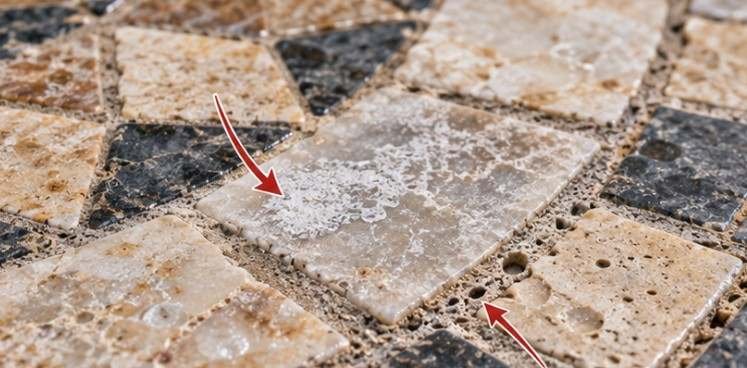
This is the most useful diagnosis you can make before repairing the mosaic. A stain usually changes color while leaving the surface texture largely intact. Acid etching often changes both sheen and texture. Run your fingertips gently across the damaged section after it is clean and dry.
Signs of light etching
The stone looks cloudy, lighter, or less reflective, but still feels relatively smooth. Damage may be limited to the finish rather than extending deeply into the tile.
Signs of moderate chemical attack
The surface feels noticeably rougher than adjacent pieces. Small depressions, uneven coloration, or loss of polish may be visible.
Signs of severe damage
Look for pits, crumbling edges, deep erosion, loose mosaic pieces, exposed aggregate, or grout that has become sandy. Acid can affect the cementitious material around the stone as well. Cement-based mortars contain calcium compounds vulnerable to acidic environments, so severe exposure may weaken grout or bedding materials rather than simply changing their appearance.
Stop the Chemical Reaction Before You Repair Anything
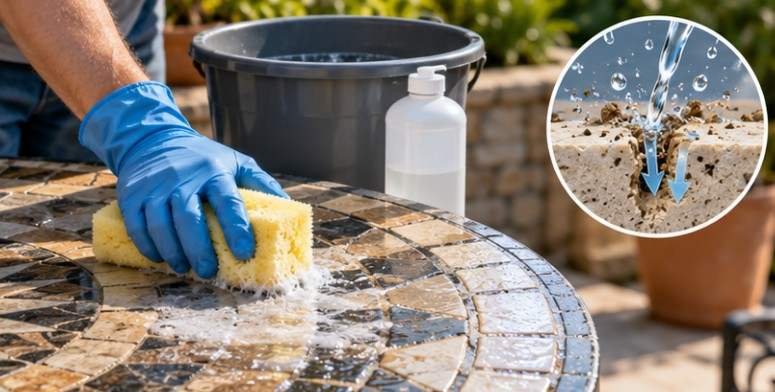
If the spill is recent, remove the acid source immediately and flush the area thoroughly with plenty of clean water, provided doing so is safe for the particular chemical involved. Do not immediately experiment with another strong chemical in an attempt to reverse the damage.
After rinsing, clean the mosaic with a stone-safe, pH-neutral cleaner according to the manufacturer’s directions. The Natural Stone Institute recommends neutral cleaners or stone soap followed by thorough rinsing.
For ordinary mild acidic residue, some homeowners use a weak baking-soda solution after extensive rinsing. However, concentrated chemicals, unknown industrial acids, pool acids, and products containing hydrofluoric acid require much more caution. Follow the product’s Safety Data Sheet and seek professional help when appropriate.
The University of Illinois preservation guidance notes that acidic substances can dissolve calcareous materials and leave surfaces porous, illustrating why prolonged acid exposure should not simply be treated as ordinary dirt.
See the University of Illinois materials preservation guidance for additional information about acid attack on calcium-containing materials.
Choose the Repair Based on How Much Stone Was Lost
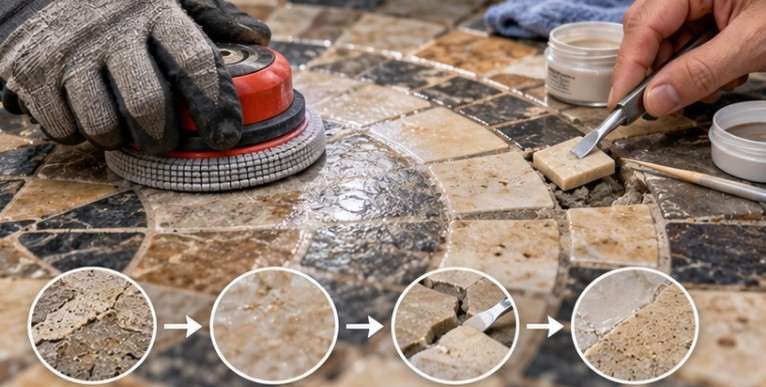
The most reliable way to decide how to repair acid damaged outdoor stone mosaic tiles is to match the repair to the depth of deterioration rather than the size of the visible mark.
Light surface dulling: Hone or polish
A shallow etch on polished marble or similar stone can sometimes be corrected by refinishing the affected surface.
Stone restoration professionals commonly use progressively finer diamond abrasives, honing pads, or polishing systems to remove a microscopic layer of damaged stone and recreate the original finish.
This is different from cleaning. You are mechanically leveling the damaged surface.
DIY polishing can work on a small, uniform area, but mosaic installations make the process harder because individual pieces may have different colors, hardness levels, and surface heights.
Always test an inconspicuous piece first.
Small pits or chips: Use a compatible repair filler
If the acid created isolated pits rather than widespread erosion, a stone-compatible epoxy or repair resin may restore the surface.
The filler should be suitable for exterior use, moisture exposure, freeze-thaw conditions where applicable, and the specific stone.
Color matching matters on mosaics. A perfectly smooth repair in the wrong color may be more noticeable than the original pit.
Avoid spreading filler across undamaged stone. Limit it to actual voids and finish it flush with the surrounding tile.
Deep erosion: Replace individual tesserae
Mosaics have one important advantage: you often do not need to replace the entire installation.
If only several pieces are severely etched, remove those individual tesserae. Carefully break or cut the damaged piece from the center inward so force is directed away from surrounding tiles. Remove the old adhesive without disturbing neighboring pieces.
Set the replacement stone with an exterior-rated mortar compatible with natural stone, maintain the original joint width, and regrout after the mortar has cured. Matching replacement pieces before demolition is wise. Natural stone varies significantly from batch to batch.
Do Not Ignore Acid-Damaged Grout
Outdoor mosaics depend on grout lines for more than appearance. Press lightly on suspicious grout with a blunt tool. Healthy grout should feel firm. If it powders, flakes, or can be scraped away easily, acid exposure may have weakened it. Remove loose material until sound grout remains, clean the joint, and replace it with a product appropriate for exterior installations.
Pay particular attention around pools, outdoor kitchens, fountains, patios, and freeze-thaw climates because recurring moisture can magnify problems created by damaged joints.
For ongoing preventive care after restoration, follow a consistent natural stone tile maintenance routine rather than waiting until staining or chemical damage becomes obvious.
Be Careful With the Idea of “Neutralizing” Stone
One common misconception is that pouring an alkaline substance onto an acid mark somehow restores the lost stone. It does not. Neutralization can stop residual acidity from continuing to react, but material already dissolved from marble or limestone is gone. Restoring the appearance requires refinishing, filling, or replacing the affected material.
The U.S. Environmental Protection Agency confirms that acidic deposition accelerates stone deterioration and can cause repair costs and loss of surface detail. You can read the agency’s explanation of acid effects on building materials.
Frequently Asked Questions
1. Can acid stains on natural stone be removed?
Sometimes discoloration can be removed, but true acid etching is physical surface damage. Etched stone usually requires honing, polishing, filling, or replacement rather than ordinary cleaning.
2. Can vinegar damage outdoor stone mosaic tiles?
Yes. Vinegar can etch calcium-rich stones such as marble, limestone, and travertine. Use a cleaner specifically approved for the stone instead.
3. How do I know if a mosaic tile needs replacement?
Replace a piece when it has deep pits, crumbling edges, significant material loss, cracking, or damage too deep to correct without creating an uneven surface.
4. Should I reseal stone after acid damage?
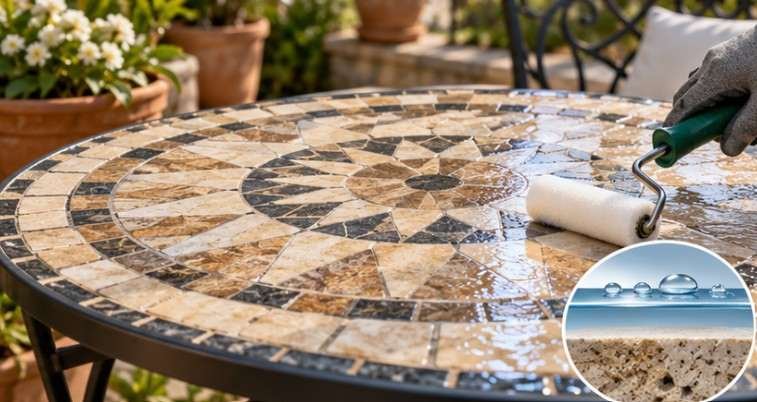
Possibly. Acid may compromise an existing sealer, but not every stone requires sealing. Allow repaired stone and grout to cure fully before evaluating or applying a compatible penetrating sealer.
Final Thoughts
Acid damage looks like a cleaning problem, but the most important lesson is that it is often a material-loss problem. Once acid has reacted with calcium-rich stone, repeatedly scrubbing the mark—or applying stronger chemicals—can enlarge the damaged area instead of fixing it.
The practical sequence is simple: identify the stone, rinse and clean safely, determine whether the surface is stained or etched, inspect the grout, and then choose refinishing, filling, or selective replacement. That disciplined approach to how to repair acid damaged outdoor stone mosaic tiles protects the surrounding mosaic while giving the damaged section the best chance of looking intentional again.