
The construction industry operates at the intersection of infrastructure development and natural resource stewardship. Every excavation, demolition, concrete pour, and material transport directly interacts with surrounding ecosystems, soils, waterways, and air basins.
Regulatory authorities enforce strict environmental mandates to prevent water contamination, air pollution, ecological destruction, and toxic worker exposures.
Violating these legal standards triggers severe stop-work orders, project delays, reputational damage, and crippling civil fines. Understanding and executing core environmental compliance standards ensures contractors maintain continuous operations while fostering sustainable building practices.
Mitigate Stormwater Runoff and Prevent Aquatic Sedimentation
Soil disturbance is an inevitable part of civil grading, site preparation, and foundation construction, leaving expansive dirt fields vulnerable to erosion during heavy storms.
Rainwater running across unshielded jobsites picks up loose silt, petroleum residues, chemical solvents, and wet cement wash water, discharging untreated contaminants into regional storm sewer systems and natural water bodies.
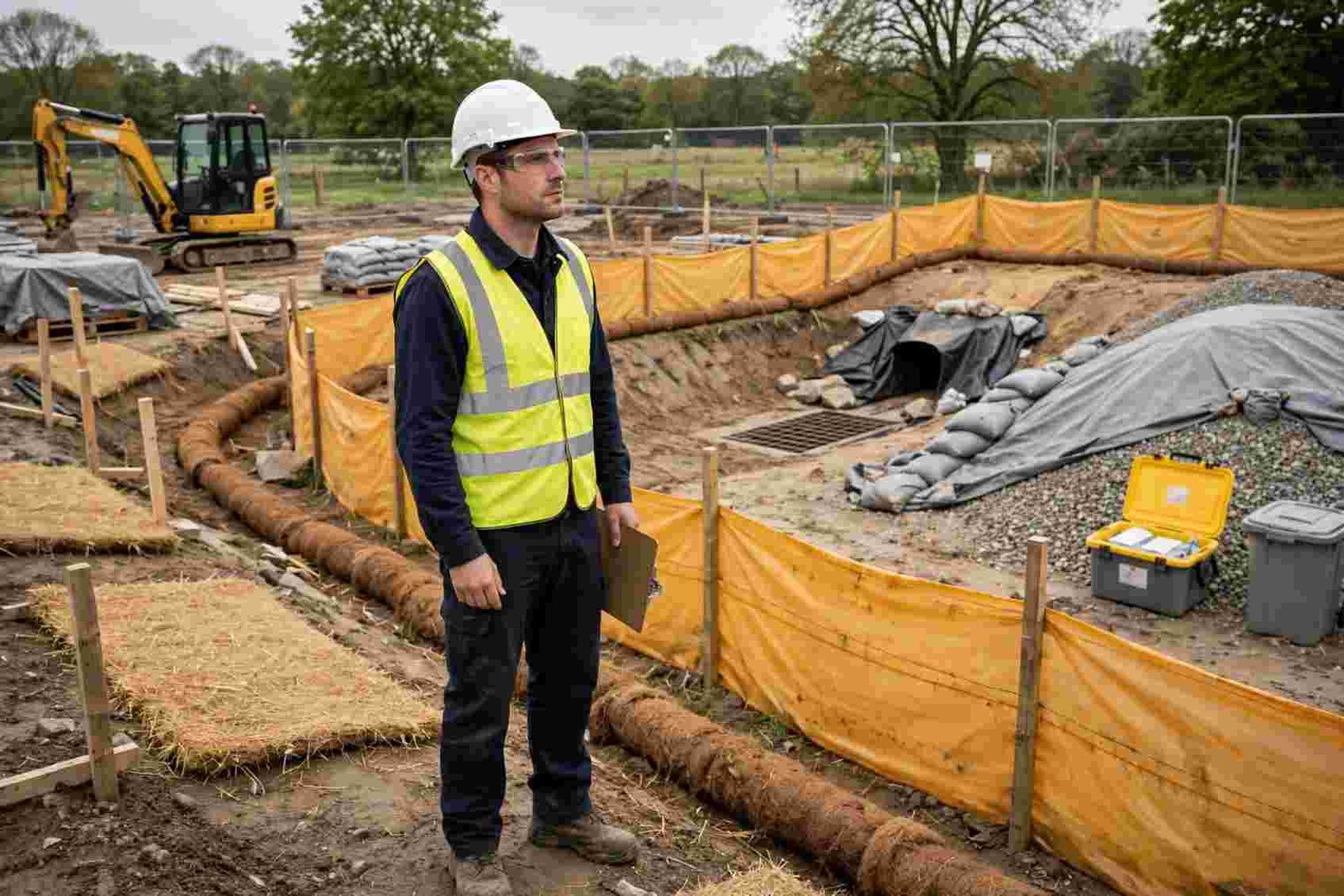
To protect municipal watersheds and maintain regulatory compliance, contractors must draft and execute a site-specific Stormwater Pollution Prevention Plan before breaking ground on projects disturbing land. For developers breaking ground in arid or mountainous topographies, implementing a compliant SWPPP in Utah involves establishing certified Best Management Practices (BMPs)—such as silt fences, straw wattles, stabilized vehicle trackout pads, and sediment containment basins.
These systems filter stormwater runoff before it enters regional tributaries, ensuring compliance with federal Clean Water Act standards and state environmental permits.
Furthermore, regulatory compliance demands continuous monitoring and adaptive maintenance throughout the construction lifecycle.
Appointed environmental managers must conduct routine site inspections after precipitation events, replace sagging silt barriers, and clean accumulating sediment out of retention traps.
Maintaining transparent digital inspection logs on-site proves regulatory adherence, protecting project leadership from municipal citations and preserving surrounding aquatic habitats.
Installing Physical Best Management Practices for Sediment Trapping
Driving silt fences deep into ground trenches catches moving silt while permitting clean surface water to filter through fabric weaves.
Constructing crushed-stone vehicle entry pads knocks caked mud off equipment tires, preventing haul trucks from tracking dirt onto public roads. Trackout control keeps public streets clean.
Managing Concrete Washout and Chemical Containment
Lining dedicated concrete washout pits with impermeable plastic membranes stops highly caustic, alkaline wash slurry from leaching into groundwater.
Storing chemical solvents, diesel fuels, and hydraulic oils within secondary containment berms eliminates chemical runoff during unexpected storms. Containment prevents toxic liquid discharges.
Control Fugitive Dust and Airborne Particulate Emissions
Massive earthmoving, aggregate crushing, vehicular hauling, and structural demolition generate high concentrations of airborne particulate matter, commonly classified as fugitive dust. Dry winds lift microscopic mineral particles into surrounding neighborhoods, creating respiratory hazards for nearby residents and violating regional clean air standards.
Air quality control agencies require contractors to draft comprehensive dust mitigation plans on active commercial and civil jobsites.
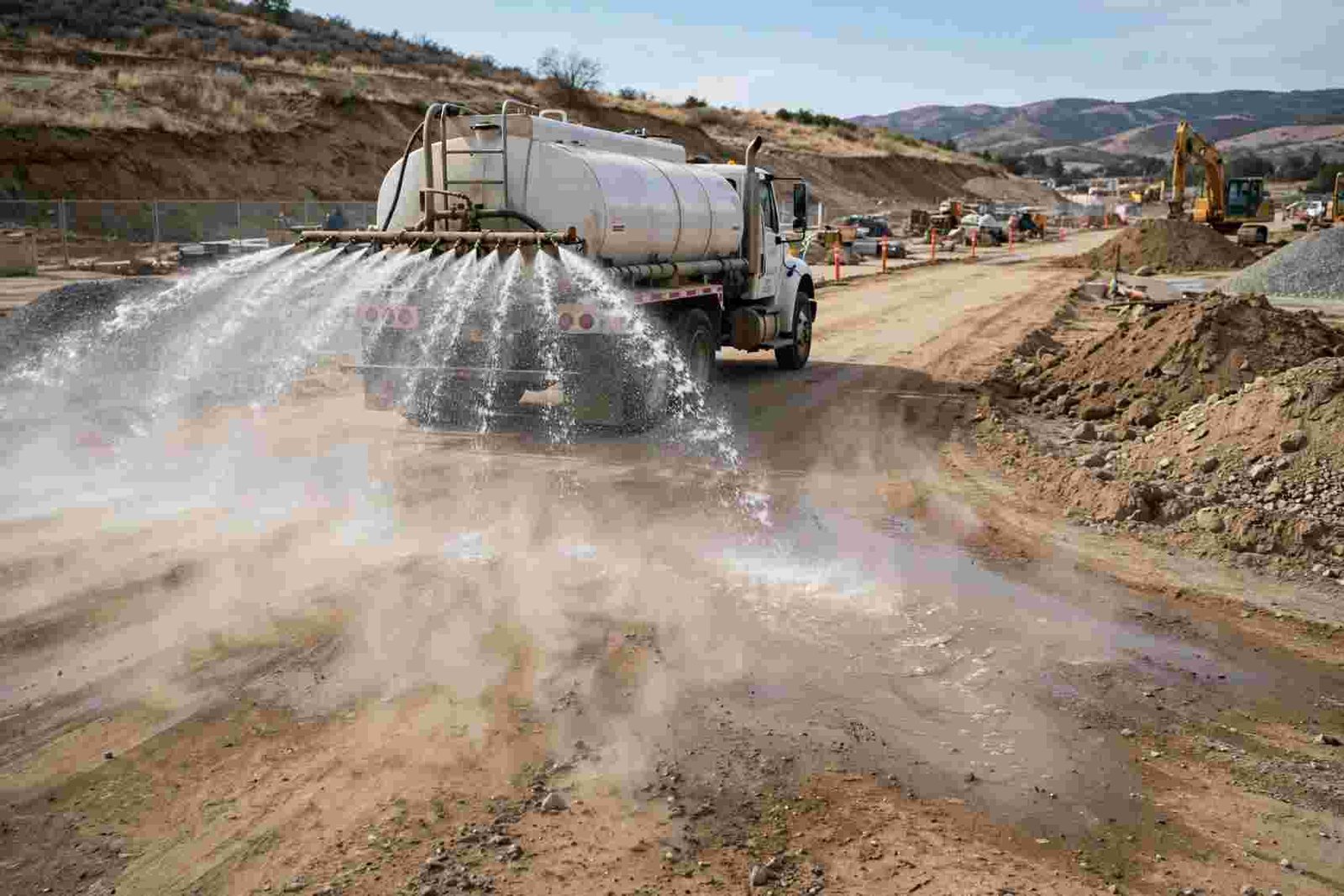
Applying continuous water sprays through dedicated water trucks or automated misting cannons dampens dry haul roads, keeping dust down during heavy grading. In arid climates, applying environmentally benign chemical soil stabilizers forms an impenetrable surface crust across dormant dirt stockpiles, preventing windblown dust storms.
Additionally, managing vehicle traffic across unpaved site areas plays an essential role in air quality preservation.
Restricting equipment travel speeds to ten or fifteen miles per hour drastically curtails particulate kick-up, while washing down haul truck beds before highway departure eliminates loose dust dispersion. Establishing continuous perimeter particulate monitoring stations ensures operations remain within legal ambient air thresholds during high-wind weather alerts.
Deploying Water Trucks and Surface Stabilizers
Spraying fine water mists over active cut-and-fill zones binds loose topsoil particles together, keeping grading operations compliant.
Treating unpaved access roads with magnesium chloride or organic polymer binders creates durable, dust-free driving surfaces that last for weeks. Chemical crusting suppresses dust effectively.
Restricting Jobsite Vehicle Speeds and Access Paths
Lowering heavy equipment travel speeds across rough earth paths reduces tire friction, preventing dust plumes from drifting into residential areas.
Confining site deliveries to designated, gravel-stabilized travel corridors minimizes overall soil disturbance across open property parcels. Traffic controls preserve clean air.
Safely Abate Legacy Hazardous Materials and Heavy Metals

Renovation and structural demolition projects frequently uncover hazardous legacy materials installed before modern environmental and occupational health restrictions. Demolishing older commercial facilities, industrial warehouses, or residential structures without preliminary environmental testing risks dispersing toxic microscopic fibers and heavy metal dust across workers and adjacent neighborhoods.
Asbestos remains a primary hazard in older building envelopes, concealed within acoustic plaster, drywall joint compounds, vinyl flooring tiles, and pipe insulation. Inhaling friable mineral fibers causes debilitating, irreversible respiratory diseases such as mesothelioma and asbestosis.
Strict environmental guidelines demand thorough pre-demolition surveys conducted by certified inspectors, followed by full containment abatement utilizing negative-air filtration machines before general demolition hammers swing.
Lead-based paints and polychlorinated biphenyls found in older lighting ballasts and structural caulking require equal containment vigilance.
Workers disturbing painted surfaces on pre-1978 structures must follow strict lead containment protocols, utilizing high-efficiency particulate air vacuums, wet-sanding techniques, and disposable protective suits. Containing toxic residues prevents hazardous heavy metals from poisoning downstream environments or generating worker liability claims.
Executing Pre-Demolition Surveys for Friable Asbestos
Extracting small material core samples from vintage ceiling textures and insulation confirms whether hazardous mineral fibers exist before demolition begins.
Erecting airtight plastic containment zones with high-efficiency particulate filtration prevents liberated asbestos fibers from migrating outside work areas. Certified containment protects public health.
Managing Toxic Lead Dust During Structural Renovations
Applying continuous water misting during mechanical paint stripping suppresses lead dust clouds, keeping heavy metal particles bound in wet slurries.
Collecting toxic lead debris inside thick, sealed polypropylene disposal bags ensures dangerous materials travel to certified hazardous waste landfills safely. Proper bagging stops chemical contamination.
Ensure Safe Management and Disposal of Hazardous Wastes
Construction and demolition operations generate substantial volumes of hazardous chemical waste that cannot be discarded into standard municipal landfills or roll-off trash dumpsters. Discarded solvent cans, leftover paint thinners, curing compounds, adhesive resins, contaminated absorbent pads, and used hydraulic fluids require specialized tracking and disposal protocols.
Federal Resource Conservation and Recovery Act standards mandate that contractors categorize their hazardous waste generation quantities accurately, maintaining rigorous chain-of-custody documentation from origin to disposal. Mixing incompatible hazardous chemicals inside unlabeled drums creates severe fire, explosion, and toxic gas risks that endanger workers and trigger substantial regulatory fines.
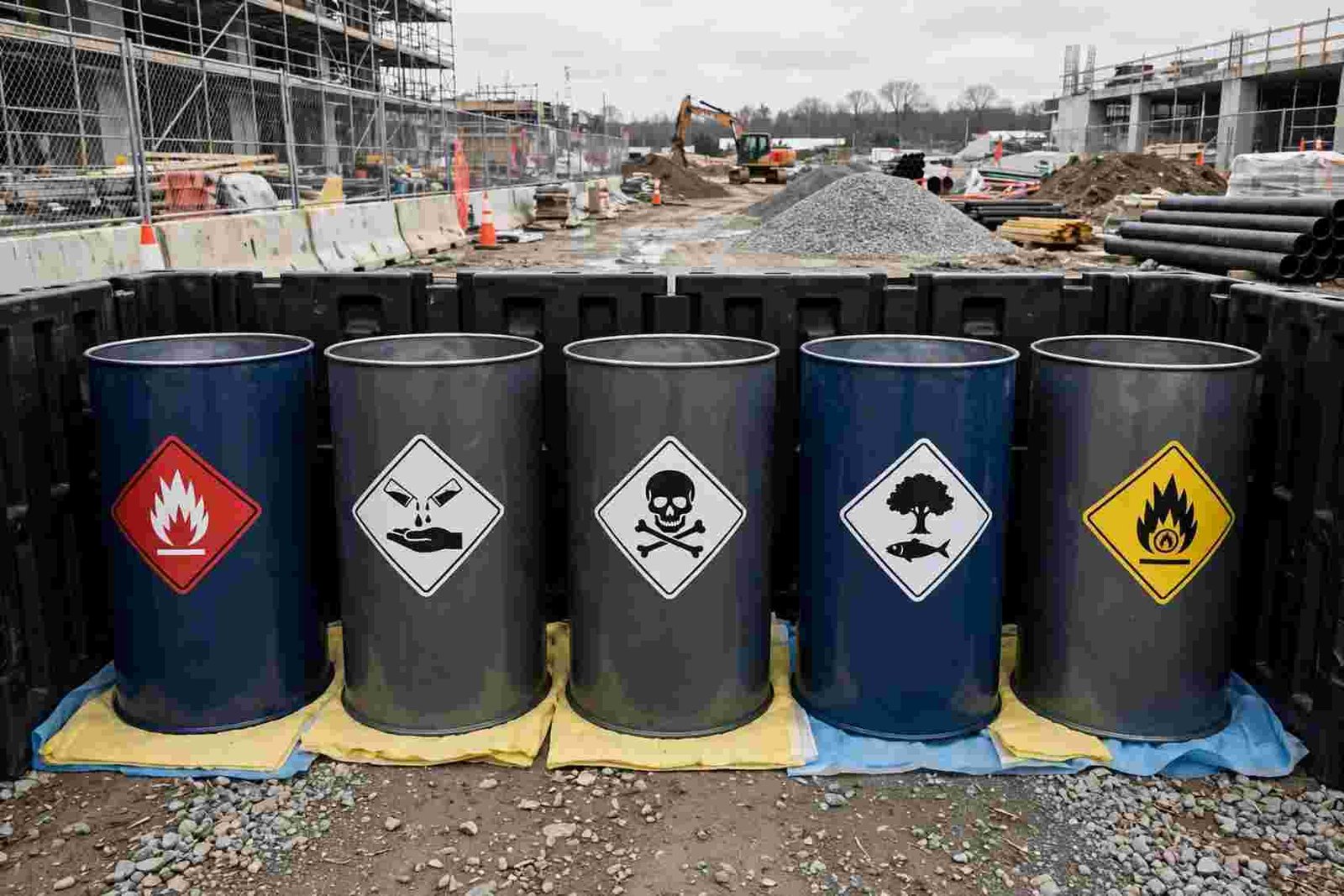
Establish dedicated, secure hazardous waste accumulation zones on-site, complete with weather-resistant secondary containment tubs, clear warning signage, and readily accessible chemical spill kits.
Partnering with licensed hazardous material transport and recycling contractors ensures that all toxic liquids, spent solvents, and contaminated materials undergo authorized incineration, neutralization, or certified recycling.
Labeling and Storing Chemical Waste Containers Securely
Sealing liquid wastes inside heavy-duty steel drums with clear chemical hazard identification placards prevents accidental cross-contamination.
Conducting weekly inspections of storage zones confirms that drums remain structurally sound without developing rust leaks or bulging lids. Secure storage prevents dangerous chemical leaks.
Utilizing Certified Waste Manifests for Traceable Disposal
Maintaining signed shipping manifests documents that hazardous chemicals arrive at permitted, certified recycling or treatment facilities lawfully.
Archiving waste manifests within corporate compliance files shields construction leadership against future third-party environmental liability claims. Certified tracking ensures regulatory accountability.
Protect Wetlands, Sensitive Ecosystems, and Endangered Species
Civil infrastructure and large-scale commercial developments frequently border ecologically sensitive terrain, including freshwater wetlands, natural vernal pools, riparian buffer corridors, and designated wildlife habitats. Disrupting these protected zones without explicit federal and state permits violates conservation statutes and halts construction indefinitely.
The federal Clean Water Act strictly regulates the discharge of dredged or fill material into national waters and associated wetlands. Before clearing land near natural watercourses, builders must delineate wetland boundaries with qualified ecological scientists and secure required permits from government conservation agencies.
Installing high-visibility orange barrier fencing along environmental buffer zones prevents heavy equipment operators from encroaching on delicate ecosystems.
Environmental responsibility also extends to the materials selected for building projects, as choosing durable, responsibly manufactured finishes can help reduce resource consumption and support more sustainable construction outcomes, including the use of eco-friendly tile options for sustainable homes.
Furthermore, compliance with endangered species protections requires reviewing site geographies for nesting migratory birds, sensitive amphibians, or endangered plant colonies.
If protected wildlife resides on-site, construction timelines must adapt to seasonal breeding windows, incorporating specialized wildlife relocation protocols and natural wildlife corridors to preserve biodiversity while maintaining project momentum.
Establishing Protective Buffer Fencing Along Wetland Margins
Staking bright orange safety fencing along surveyed wetland boundaries establishes clear visual barriers that prevent bulldozers from compacting sensitive soils.
Prohibiting fuel refueling and chemical storage within one hundred feet of natural wetlands stops accidental toxic spills from entering delicate waterways. Marked buffers protect aquatic ecosystems.
Adapting Site Schedules for Wildlife Breeding Windows
Pausing tree felling and heavy clearing operations during active migratory bird nesting seasons prevents unlawful destruction of federally protected wildlife.
Consulting ecological biologists allows contractors to establish safe, non-invasive wildlife exclusion zones while keeping non-sensitive site work moving. Adaptive scheduling protects natural biodiversity.
Prevent Equipment Fluid Spills and Maintain Emergency Protocols
Modern construction projects rely on an armada of diesel-powered heavy equipment, including excavators, bulldozers, cranes, and concrete pump trucks. Each mechanical unit contains hundreds of gallons of pressurized hydraulic fluid, motor oil, antifreeze, and diesel fuel, representing a continuous risk for localized ground contamination.
Preventative mechanical maintenance is the primary defense against unexpected equipment leaks. Implementing mandatory daily pre-shift equipment walkthroughs allows operators to detect cracked hydraulic lines, weeping gaskets, and loose fittings before pressurized fluids burst onto unpaved ground. Defective equipment must be taken out of service immediately and routed to designated repair staging pads.
Every jobsite must maintain a written Spill Prevention, Control, and Countermeasure plan paired with abundant physical response equipment.
Distributing industrial spill kits—containing absorbent booms, pads, granular drying clay, and chemical-resistant gloves—across all fueling stations and equipment parking yards ensures workers can contain accidental fuel ruptures within minutes, preventing toxins from soaking into deep aquifers.
Performing Mandatory Pre-Shift Equipment Inspections
Examining high-pressure hydraulic hoses for surface wear, blistering, or crimp leaks prevents high-volume fluid ruptures across open dirt terrain.
Placing portable catch pans beneath stationary diesel generators and air compressors catches slow engine oil drips before fluids touch the ground. Catch pans eliminate chronic oil contamination.
Stocking and Deploying Rapid-Response Spill Kits
Equipping mobile fueling trucks with heavy absorbent booms allows field crews to dam expanding fuel leaks around ruptured machine tanks instantly.
Shoveling petroleum-saturated soil into sealed salvage drums ensures contaminated ground undergoes thermal remediation at licensed treatment plants. Fast response neutralizes environmental spills.
Conclusion
Mastering essential environmental regulations is a vital operational competency that distinguishes successful construction businesses in an increasingly regulated marketplace.
By implementing robust stormwater pollution prevention plans, controlling fugitive dust, safely handling legacy hazards, managing chemical waste streams, shielding sensitive wetlands, and executing rigorous equipment spill protocols, contractors build a culture of environmental accountability.
Proactive compliance eliminates costly project shutdowns, safeguards local communities, and protects the natural environment. Prioritizing environmental stewardship today ensures your construction business operates sustainably, profitably, and with uncompromised integrity across every future build.
Extending these sustainability principles beyond the construction phase, property owners can adopt practical upgrades that improve energy efficiency, conserve resources, and reduce their environmental footprint through eco-friendly home improvements.