When I first moved into my new apartment, I had no idea how much the colour of my bedroom walls could impact my sleep. I thought, “How much of a difference could it really make?” Well, turns out, quite a bit! I painted the room a bright, bold shade of yellow, thinking it would make me feel energized.
Instead, I found myself tossing and turning at night, unable to fully relax. After doing some research (and repainting), I discovered how important choosing the right colour for your sleeping room is. So, whether you’re looking to get better sleep or just want to create a peaceful retreat, let’s dive into the best colour for your sleeping room!
What Is the Best Colour for a Sleeping Room?
Best colour scheme for your sleeping room isn’t just about aesthetics—it’s about how the colour impacts your sleep and mood. So, let’s explore the top colours that can transform your space into a relaxing sanctuary.
Soft Blue: The Sleep Champion
Soft blue is often cited as the top colour for sleep. It’s closely associated with the calmness of the sky and ocean, creating a tranquil and peaceful environment. Research has even shown that blue can control blood pressure and heart rate, making it a perfect colour for your sleeping room. If you want to feel relaxed and at ease, light blue is the ideal choice for your walls.
Sage Green: Nature’s Calm
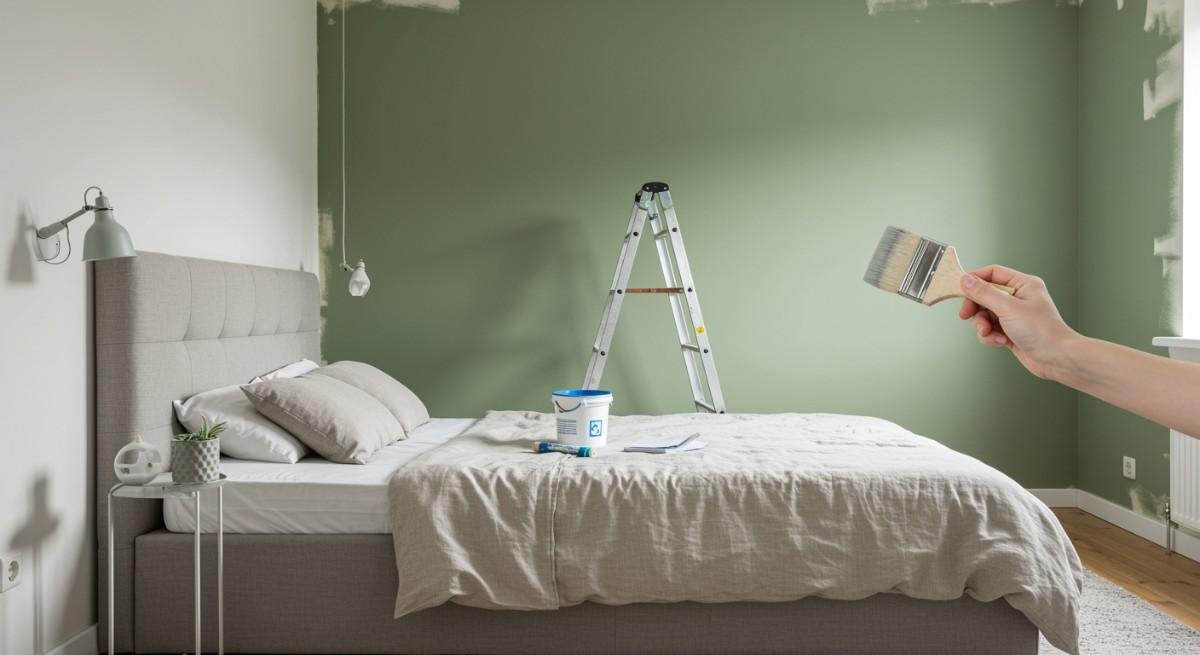
Sage or mint green is reminiscent of nature, making it a perfect choice for a calming environment. It promotes a sense of balance and harmony, helping you unwind after a long day. This colour is associated with feelings of peace and hope, encouraging relaxation and reducing stress. It’s a great option if you want your sleeping room to feel like a peaceful retreat.
Light Gray: Calming and Sophisticated
Light gray is a versatile and neutral colour that can create a sophisticated, calming atmosphere without overstimulation. It’s often referred to as “greige” when it leans towards a warmer tone, adding a touch of coziness. Whether you go for a cool or warm gray, it’s a great option for those who prefer understated elegance while still fostering a relaxing environment. It pairs well with almost any decor style, adding to its appeal.
Beige and Warm Neutrals: Earthy Comfort
If you’re looking for comfort and warmth, beige and other warm neutrals are excellent choices for your sleeping room. These earthy tones provide a sense of security and invite relaxation. They help create a cozy, inviting atmosphere without overwhelming the senses. These colours work well in both modern and traditional bedrooms, offering a timeless appeal.
Lavender/Pale Mauve: Stress-Reducing Calm
Soft lavender and pale mauve are known for their calming properties, making them a great option for promoting restfulness. These light purple shades are not only aesthetically pleasing but are also known to reduce stress and anxiety. They help ease the transition to sleep by calming the nervous system, making your bedroom feel like a peaceful haven at night.
Soft Pink/Blush: Comfort and Reassurance
Muted, light pinks and blush tones evoke feelings of comfort and reassurance. These colours help create a gentle, restful environment, ideal for winding down. Soft pinks bring a sense of warmth and tenderness to the room, contributing to a serene and peaceful sleeping atmosphere. If you want your room to feel cozy and nurturing, this is the colour for you.
Colours to Avoid in Your Sleeping Room
While the right colours can improve your sleep quality, certain colours should be avoided as they can disrupt relaxation and rest. Here’s a look at the colours that are best left out of your sleeping room.
Bright Red: Energizing but Disruptive
Red is a highly stimulating colour that can increase heart rate and blood pressure, making it an energizing choice. While it can be great for social spaces like living rooms or dining areas, it’s not ideal for a sleeping room. Red can promote alertness and aggression, which is the opposite of what you want when trying to wind down and relax.
Bright Orange or Yellow: Overstimulating
Bright orange and vivid yellow are energetic colours that can stimulate mental activity, making it harder to relax and fall asleep. These colours are associated with increased energy levels, making them better suited for high-activity areas. In a bedroom, they can disrupt your natural sleep cycles and prevent you from getting the rest you need.
Deep Purple: Creativity Over Relaxation
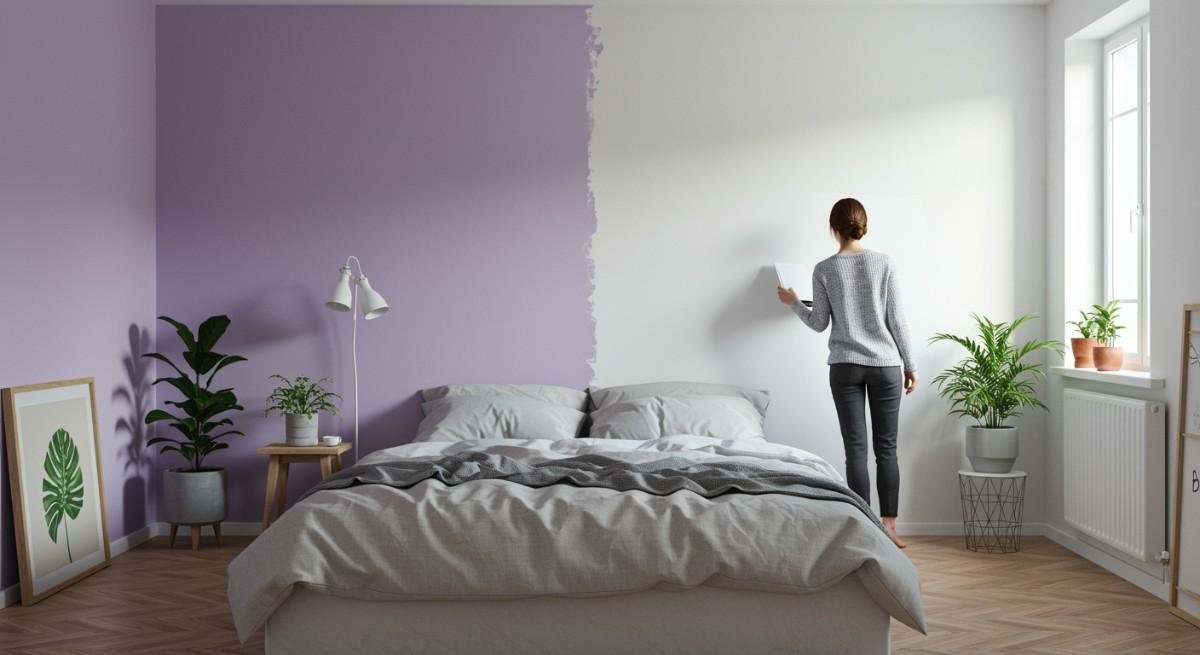
While deep purple can be a luxurious and regal colour, it’s not the best choice for a sleeping room. Dark purple can stimulate creativity and imagination, which is great for brainstorming or artistic spaces. However, it can keep your mind active at bedtime, making it harder to wind down and sleep.
Dark Brown or Black: Gloomy and Oppressive
Dark brown and black can create a gloomy or oppressive atmosphere in your bedroom. These colours are associated with negative emotions like sadness or anxiety, which can make it harder to relax and fall asleep. While they can work as accent colours or in small doses, using them on large walls might make your room feel heavy and unsettling.
How to Choose the Best Colour for Your Sleeping Room
Choosing the best colour for your sleeping room isn’t just about picking what’s trendy or visually appealing—it’s about creating a space that promotes relaxation and restful sleep. Here’s a step-by-step guide to help you pick the perfect colour.
Step 1: Consider Your Personal Preferences
Before you get overwhelmed by all the options, take a moment to think about what feels most relaxing to you. Do you prefer cool, calming tones, or do you enjoy warm, cozy neutrals? Your personal style and preferences should guide your choice. Take into account your favourite colours and the overall vibe you want to create.
Step 2: Assess Natural Light in the Room
The amount of natural light your room gets will affect how certain colours appear. Lighter shades, like soft blue or sage green, work well in rooms with little natural light, as they can make the space feel brighter and more open. If your bedroom gets a lot of natural light, you can opt for darker shades, like light gray or beige, without worrying about it feeling too dark.
Step 3: Test Paint Samples
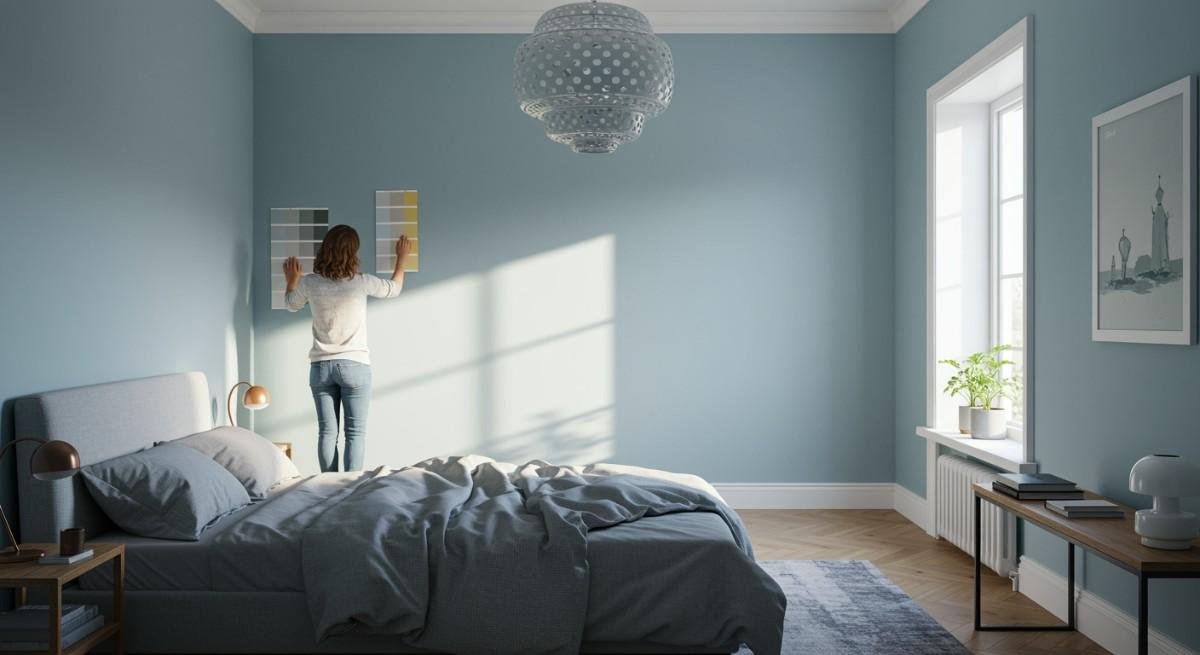
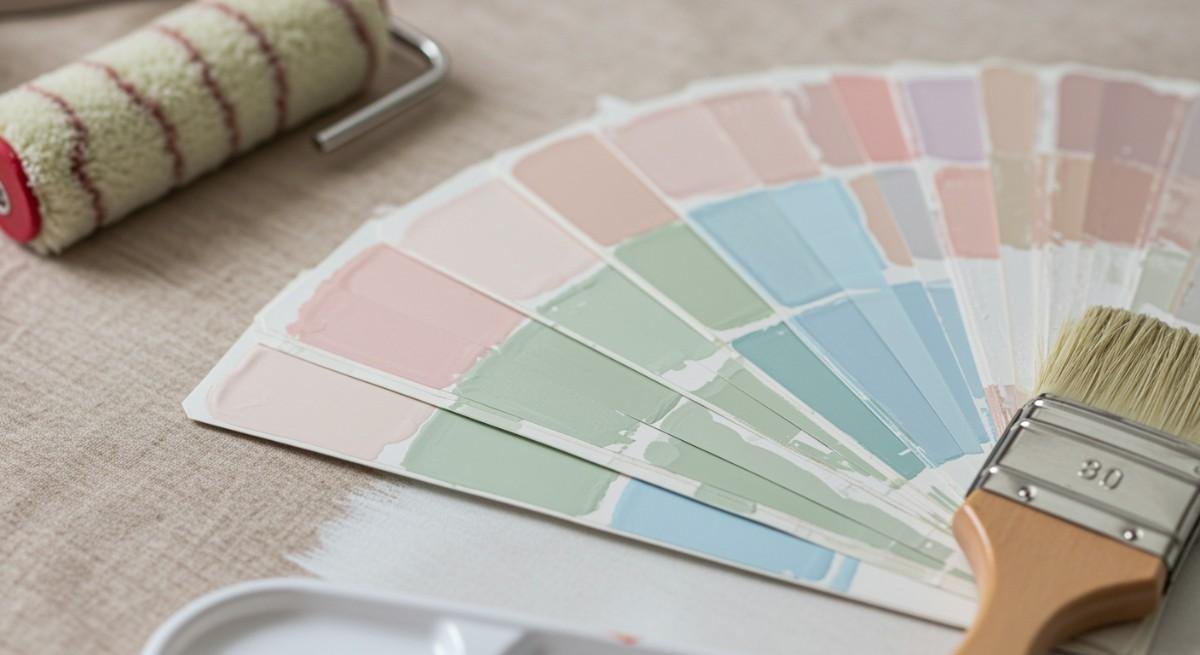
Once you’ve narrowed down your colour choices, it’s important to test samples on the walls. Paint swatches can look different depending on the lighting in your room, so it’s crucial to see how the colour changes throughout the day. Live with the samples for a few days to make sure it gives you the calming effect you’re after.
Frequently Asked Questions
1. What colour should I paint my bedroom if I have trouble sleeping?
If you have trouble sleeping, opt for soft, calming colours like light blue, sage green, or light gray. These colours promote relaxation and help lower stress levels, making it easier to fall asleep.
2. Can I use dark colours in my bedroom?
While dark colours like deep purple or dark brown can create a cozy atmosphere, they can also stimulate the mind and make it harder to relax. If you love dark colours, use them sparingly as accent shades rather than on large surfaces like walls.
3. How can I make my bedroom feel bigger with colour?
To make a small bedroom feel larger, use light colours like soft whites, pastels, or light neutrals. These colours reflect light and make the space feel airy and open, while dark colours can make a room feel more cramped.
Your Bedroom, Your Sanctuary
Choosing the best colour for your sleeping room isn’t just about aesthetics—it’s about creating an environment that supports relaxation and quality sleep. Whether you go for a tranquil blue, a soothing green, or a cozy neutral, the right colour can make all the difference in how well you sleep. So, take the time to pick a shade that feels right for you, and soon, your bedroom will become the peaceful retreat you’ve always wanted.
Pro Tip: Don’t forget the power of lighting! While choosing the best colour is key, lighting can completely transform your room’s vibe. Soft, warm lighting paired with calming colours creates the ultimate sleep sanctuary. Sweet dreams!